


Please Leave Us A Message
Privacy statement: Your privacy is very important to Us. Our company promises not to disclose your personal information to any external company with out your explicit permission.


Hospital medical radiation shielding refers to the specialized protective barriers and materials used in healthcare facilities to block ionizing radiation from diagnostic and therapeutic equipment such as X-ray machines, CT scanners, MRI rooms, and linear accelerators. Effective shielding is critical for protecting patients, medical staff, and the surrounding environment from harmful exposure.
Traditional lead-based shielding is being increasingly replaced by advanced high-density tungsten alloy shielding solutions. These modern alternatives offer superior performance, including higher density and better durability, while addressing environmental and safety concerns associated with lead. Tungsten alloys provide a robust, non-toxic, and long-lasting solution for maintaining strict radiation safety standards in hospitals.
With densities up to 18 g/cm³, tungsten alloys provide exceptional radiation attenuation in thinner profiles compared to traditional lead or concrete, saving valuable space in clinical settings.
Unlike lead, tungsten is environmentally benign and non-toxic, simplifying disposal and handling procedures while ensuring compliance with strict health and safety regulations.
Tungsten alloys resist corrosion, deformation, and wear, ensuring long-term structural integrity and consistent radiation protection without frequent replacement.
Zhuzhou Jiuding Metal Technology Co., Ltd. leverages over two decades of expertise in refractory and tungsten alloy manufacturing to produce top-tier medical radiation shielding. Our state-of-the-art facility employs advanced Metal Injection Molding (MIM) and precision pressing technologies to create shielding components with exact geometries and superior material properties.
Every product undergoes rigorous quality control measures aligned with international standards. We hold certifications for ISO 9001, ISO 14001, ISO 45001, and critically for the medical sector, ISO 13485. This ensures that our shielding solutions meet the highest benchmarks for reliability, safety, and regulatory compliance in hospital environments.
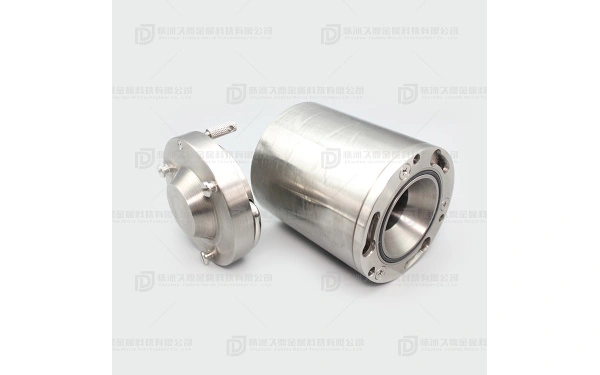
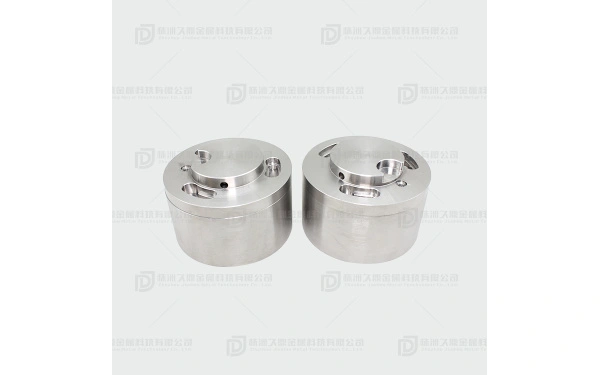
When sourcing hospital medical radiation shielding, buyers must prioritize suppliers with proven expertise in tungsten heavy alloys and relevant medical certifications. Key factors include:
Ensure the supplier holds ISO 13485 certification, demonstrating adherence to medical device quality management systems. This is non-negotiable for hospital-grade products.
Verify the tungsten concentration and density of the alloy. Higher purity ensures better radiation attenuation per unit thickness, allowing for more compact shielding designs.
Hospitals have unique architectural constraints. Choose a manufacturer capable of custom shapes via MIM or CNC machining to fit specific room layouts and equipment needs.
Using alloys with insufficient tungsten content can result in poor radiation blocking, requiring thicker walls that compromise space efficiency. Always verify density reports from independent labs.
Many industrial tungsten suppliers lack ISO 13485 certification. Without this, products may not meet the stringent hygiene and quality standards required for hospital installation.
Off-the-shelf shielding often doesn't fit complex hospital architectures. Suppliers without advanced MIM or CNC capabilities may deliver parts with poor fit, leading to installation delays and additional costs.
Legacy lead-based shields pose disposal challenges. Transitioning to non-toxic tungsten alloys eliminates these risks but requires careful vendor selection to ensure true eco-friendly composition.
A leading Chinese manufacturer established in 2001, specializing in tungsten heavy alloys and medical shielding solutions. With strong funding, advanced MIM technology, and an R&D group led by university professors, they offer a complete turnkey solution for hospital radiation protection.
Shielding for X-ray, CT, and MRI suites where precise attenuation is needed to protect adjacent areas from scatter radiation.
Heavy-duty shielding for linear accelerators and brachytherapy rooms, requiring high-density materials to block high-energy beams.
Storage containers, syringe shields, and transport casks for radioactive isotopes used in diagnostic and treatment procedures.
Custom shielding for particle accelerators and research reactors where experimental setups require flexible, high-performance barriers.
Portable and fixed shielding for non-destructive testing (NDT) equipment used in aerospace and automotive industries.
Compact shielding solutions for veterinary X-ray and CT equipment, ensuring safety for animal handlers and owners.
Tungsten alloys are denser, stronger, and non-toxic compared to lead. They offer better radiation attenuation in thinner profiles and eliminate environmental hazards associated with lead disposal.
Yes, we utilize advanced Metal Injection Molding (MIM) and CNC machining to produce custom-shaped shielding components tailored to specific hospital architectural requirements.
Absolutely. Tungsten is non-toxic, chemically stable, and does not corrode. It is fully compliant with medical safety standards and poses no risk to patients or staff.
Our company is certified to ISO 9001, ISO 14001, ISO 45001, and ISO 13485. These certifications ensure our products meet the highest quality and medical device standards globally.
Yes, we have extensive experience exporting to countries including the USA, Canada, Japan, and across Europe, ensuring reliable logistics and compliance with international trade regulations.
About Us
Related Products List
Contact Us

Privacy statement: Your privacy is very important to Us. Our company promises not to disclose your personal information to any external company with out your explicit permission.
Fill in more information so that we can get in touch with you faster
Privacy statement: Your privacy is very important to Us. Our company promises not to disclose your personal information to any external company with out your explicit permission.