


Please Leave Us A Message
Privacy statement: Your privacy is very important to Us. Our company promises not to disclose your personal information to any external company with out your explicit permission.


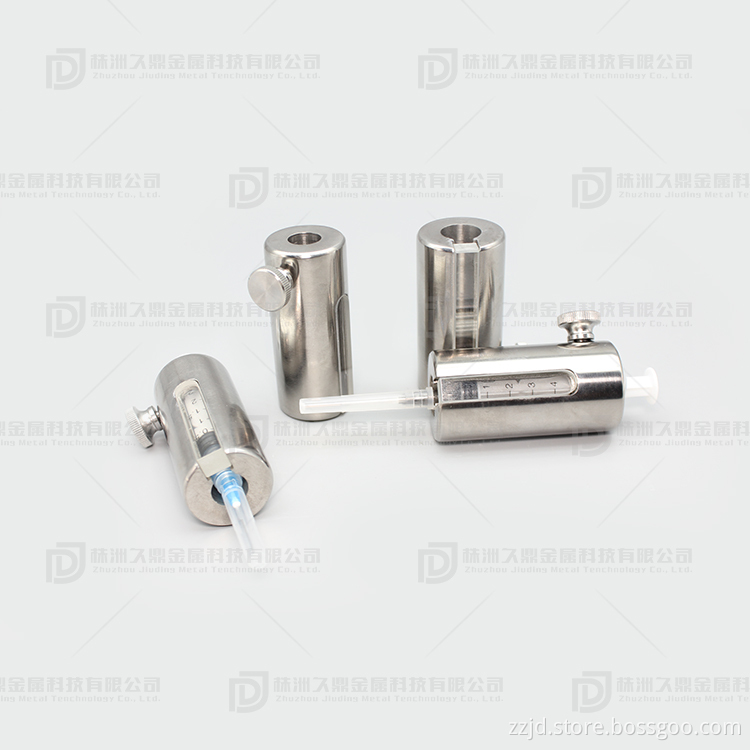
Tungsten alloy radiation shielding is a critical component in high-stakes industries where personnel safety and equipment integrity are paramount. Engineered with exceptionally high density, these shields provide superior protection against harmful ionizing radiation, outperforming traditional lead alternatives.
With densities reaching up to 18.5 g/cm³, tungsten alloys offer maximum attenuation for X-rays and gamma rays, ensuring robust safety compliance across medical and industrial settings.
Unlike lead, our tungsten alloy products are non-toxic and environmentally friendly, eliminating hazardous disposal costs and regulatory risks for your facility.
Zhuzhou Jiuding Metal Technology Co., Ltd. leverages over two decades of expertise to deliver premium tungsten heavy alloy manufacturing solutions. Our production is backed by ISO 9001, ISO 14001, ISO 45001, and ISO 13485 certifications, guaranteeing consistent quality for global buyers.
We utilize state-of-the-art Metal Injection Molding (MIM) and pressing technologies, allowing us to manufacture complex geometries that meet precise engineering specifications. This versatility ensures you receive custom-fitted shielding components without compromising on structural integrity.
Our dedicated research group, led by materials science professors and senior engineers, collaborates closely with Central South University. This continuous innovation keeps our shielding products at the forefront of national and international standards.
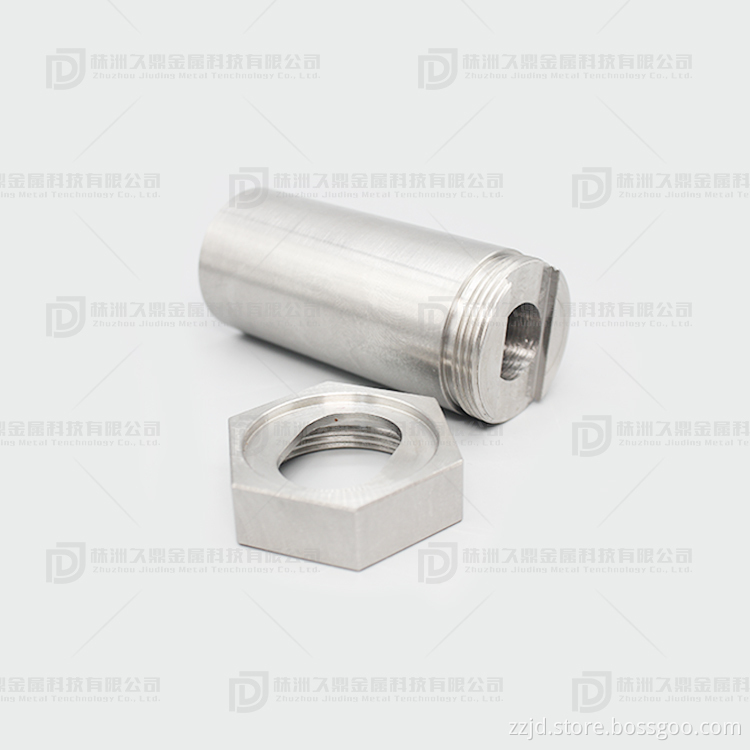
Selecting the optimal tungsten alloy radiation shield requires balancing technical performance with procurement efficiency. Buyers must evaluate material composition, density requirements, and manufacturing precision to ensure long-term reliability.
Partner with manufacturers who possess in-house R&D and advanced machining capabilities. This reduces lead times and allows for rapid prototyping, accelerating your time-to-market.
Use this checklist to streamline your procurement process and ensure you select a reliable partner for tungsten alloy shielding supply.
When sourcing tungsten alloy radiation shielding, choosing a manufacturer with comprehensive capabilities reduces risk and enhances value. Here is why global distributors trust Zhuzhou Jiuding Metal Technology Co., Ltd.
Operating since 2001, we bring over 20 years of specialized experience in refractory metals and tungsten alloys.
From raw material processing to precision machining, we handle the entire supply chain under one roof.
Our products are widely used in aerospace, medical equipment, and military applications across America, Canada, and Japan.
Navigating the market for tungsten alloy shielding components can present challenges. Addressing these common pitfalls early in the sourcing process ensures a smoother transaction.
Low-quality alloys may fail to provide adequate radiation protection. Always request material test reports verifying density and composition.
Standard pressing may not suit intricate designs. Ensure your supplier utilizes MIM technology for complex shapes to avoid dimensional inaccuracies.
Using non-certified materials can lead to legal issues. Prioritize suppliers with ISO 13485 (medical) or equivalent industry certifications.
Fragmented supply chains cause delays. Partner with integrated manufacturers who control both production and machining processes.
The unique properties of tungsten alloys make them indispensable across diverse sectors requiring reliable radiation protection and high-density counterweights.
Used in X-ray machines, CT scanners, and radiotherapy devices to protect patients and operators from harmful radiation.
Essential for aircraft counterbalances, missile guidance systems, and nuclear defense shielding due to high density and strength.
Providing durable shielding for downhole tools and portable radiation sources during geological surveys.
Get quick answers to common questions about tungsten alloy radiation shielding procurement and specifications.
Tungsten alloy offers higher density and better radiation attenuation per unit thickness compared to lead. Additionally, it is non-toxic and environmentally friendly, whereas lead requires strict handling and disposal protocols.
Yes. We utilize Metal Injection Molding (MIM) technology to produce complex geometries with high precision. This allows us to create custom shielding components tailored to specific equipment designs.
Our company is certified to ISO 9001, ISO 14001, ISO 45001, and ISO 13485 standards, ensuring our products meet rigorous international quality and safety requirements.
Primary applications include medical imaging (X-ray, CT), nuclear medicine, aerospace counterweights, military defense, and oil exploration equipment.
About Us
Related Products List
Contact Us

Privacy statement: Your privacy is very important to Us. Our company promises not to disclose your personal information to any external company with out your explicit permission.
Fill in more information so that we can get in touch with you faster
Privacy statement: Your privacy is very important to Us. Our company promises not to disclose your personal information to any external company with out your explicit permission.