


Please Leave Us A Message
Privacy statement: Your privacy is very important to Us. Our company promises not to disclose your personal information to any external company with out your explicit permission.


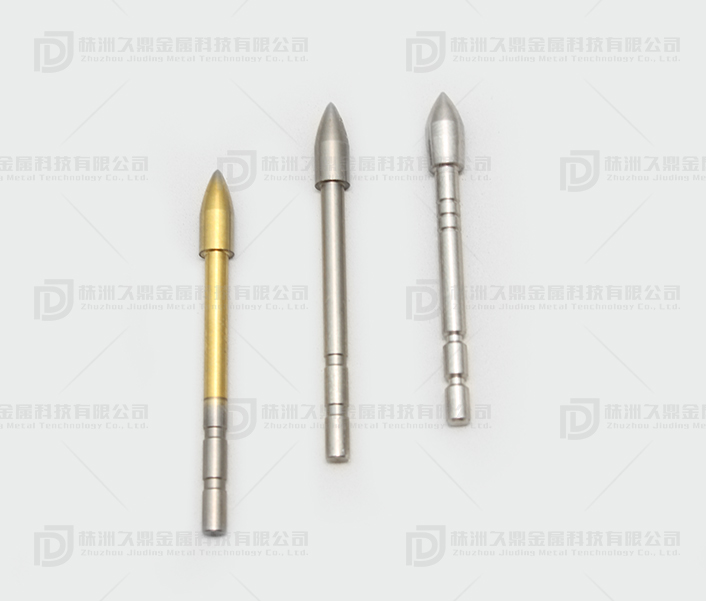
A Tungsten Heavy Alloy Stabilizer is a precision counterweight component engineered to maintain balance and stability in high-performance rotating machinery. Utilizing the exceptional density of tungsten alloys (typically 85% to 97% tungsten), these stabilizers provide maximum mass in the smallest possible volume, making them critical for aerospace gyroscopes, medical imaging equipment, and industrial sensors.
Unlike traditional steel or lead weights, tungsten heavy alloy stabilizers offer superior vibration damping and radiation shielding properties. This ensures that your sensitive equipment operates with pinpoint accuracy over its entire lifespan, reducing maintenance downtime and improving overall system reliability.
Maximizes stability per cubic inch, allowing for compact, lightweight designs without sacrificing performance.
High-density tungsten allows for precise center-of-gravity adjustment in tight spaces, ensuring smooth operation at high RPMs.
The inherent material properties absorb shock and reduce noise, protecting delicate internal components from wear and tear.
Resistant to corrosion and oxidation, these stabilizers maintain their weight and structural integrity over decades of use.
Zhuzhou Jiuding Metal Technology Co., Ltd. leverages advanced Metal Injection Molding (MIM) and pressing technologies to manufacture tungsten heavy alloy stabilizers with exceptional dimensional accuracy.
Our rigorous quality control processes, certified under ISO 9001, ISO 14001, ISO 45001, and ISO 13485, ensure every batch meets international standards. From raw material sourcing to final machining, we guarantee consistent density and surface finish, giving you confidence in every unit delivered.
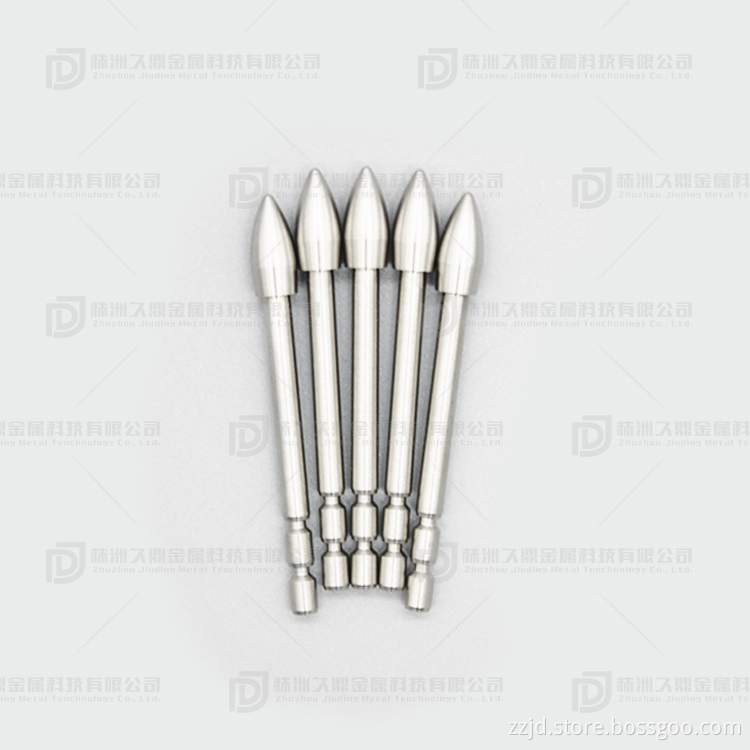
Selecting the correct stabilizer involves balancing several technical parameters:
Established in 2001, specializing in MIM and pressing tech. Ideal for complex geometries and high-volume orders.
Look for suppliers offering Tungsten Copper or Pure Tungsten options if thermal conductivity is also required.
Prioritize suppliers with university partnerships (e.g., Central South University) for custom alloy formulation.
Low-quality manufacturing can lead to porosity, causing weight variations that destabilize rotating parts.
Source from manufacturers with strict ISO 9001 protocols and regular density testing reports.
Tungsten alloys are hard to machine, leading to high scrap rates and delayed deliveries from inexperienced suppliers.
Choose suppliers using Metal Injection Molding (MIM) for near-net-shape production, minimizing costly post-processing.
Typical densities range from 16.5 g/cm³ (W85) to 18.0+ g/cm³ (W97). Higher density allows for smaller, lighter stabilizers to achieve the same balancing effect.
Yes, through Metal Injection Molding (MIM) and precision machining, we can produce complex geometries beyond standard discs and cylinders to fit your specific design requirements.
For medical and aerospace applications, look for ISO 13485 and ISO 9001. Environmental and safety standards like ISO 14001 and ISO 45001 indicate a mature, reliable manufacturing process.
Tungsten is approximately twice as dense as lead, allowing for significant size reduction. It is also non-toxic and environmentally friendly, unlike lead, which faces increasing regulatory restrictions.
MOQ varies by complexity and manufacturing method (MIM vs. machining). We recommend contacting our sales team directly for a quote tailored to your volume needs.
About Us
Related Products List
Contact Us

Privacy statement: Your privacy is very important to Us. Our company promises not to disclose your personal information to any external company with out your explicit permission.
Fill in more information so that we can get in touch with you faster
Privacy statement: Your privacy is very important to Us. Our company promises not to disclose your personal information to any external company with out your explicit permission.