


Please Leave Us A Message
Privacy statement: Your privacy is very important to Us. Our company promises not to disclose your personal information to any external company with out your explicit permission.


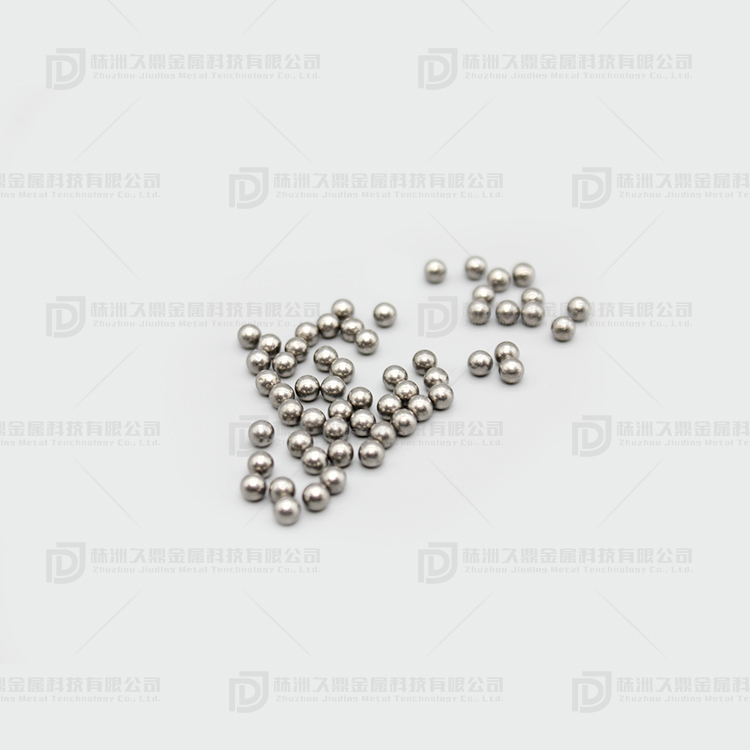
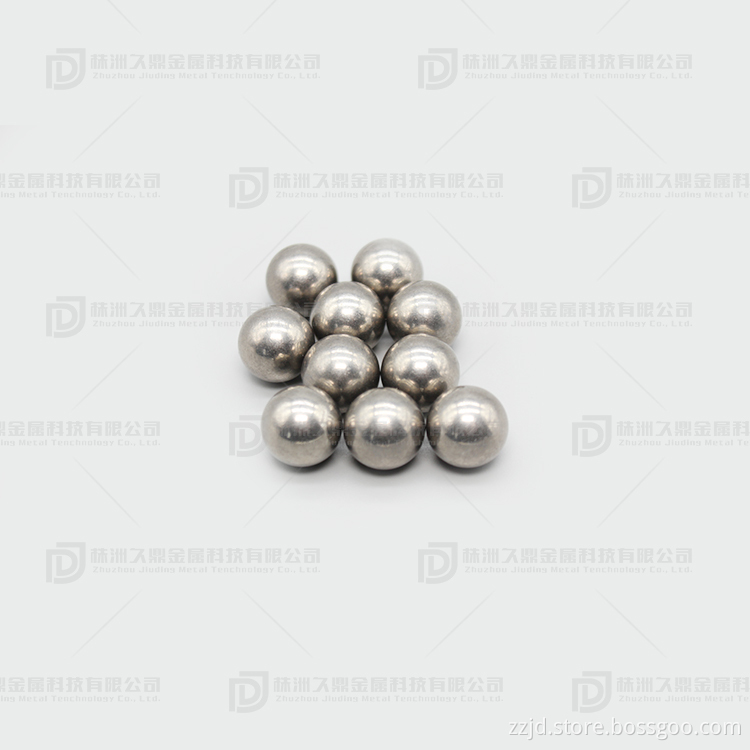
ASTM tungsten alloy balls are precision-engineered spherical components manufactured from high-density tungsten heavy alloys (WHA), typically composed of 90-95% tungsten with nickel, iron, or copper as binding agents. These specialized spheres are produced in strict accordance with ASTM International standards, ensuring consistent density, dimensional accuracy, and mechanical properties critical for demanding industrial applications.
The exceptional density of tungsten alloy balls (typically 16.5-18.0 g/cm³) makes them significantly heavier than steel counterparts of the same size, providing superior mass concentration in compact volumes. This unique characteristic enables designers to reduce component size while maintaining or increasing weight, optimizing performance in aerospace, medical, and defense applications where space constraints and mass efficiency are paramount.
These alloy spheres exhibit excellent hardness, wear resistance, and radiation shielding capabilities, making them indispensable in industries requiring precise mass distribution, vibration damping, counterbalancing, and X-ray attenuation. The ASTM certification guarantees traceability, material composition verification, and consistent quality control throughout production.
Zhuzhou Jiuding Metal Technology Co., Ltd. leverages state-of-the-art Metal Injection Molding (MIM) and pressing technology to produce tungsten alloy balls with exceptional precision and consistency. Our established R&D group, led by materials science professors and senior engineers, ensures that every batch meets the most stringent industry requirements.
Our quality management system is certified to ISO 9001, ISO 14001, ISO 45001, and ISO 13485 standards, reflecting our commitment to quality, environmental responsibility, occupational health and safety, and medical device manufacturing excellence. Each tungsten alloy ball undergoes rigorous inspection including dimensional measurement, density testing, surface finish evaluation, and material composition verification before shipment.
With over two decades of experience since 2001, we have developed proprietary processes that optimize sintering parameters, control grain structure, and minimize internal porosity. This technical expertise translates into superior product reliability and reduced procurement risk for our global clients.
Select the appropriate density grade based on your application requirements. Standard tungsten heavy alloys offer densities between 16.5-18.0 g/cm³. Higher density variants provide greater mass per unit volume but may require longer lead times and carry premium pricing. Confirm exact density tolerances with your supplier to ensure compatibility with your design specifications.
Precision requirements vary significantly across applications. Aerospace and medical devices typically demand tolerances within ±0.01mm to ±0.05mm, while general counterbalance applications may accept ±0.1mm. Discuss your geometric dimensioning and tolerancing (GD&T) requirements early in the sourcing process to avoid costly rework or delays.
Surface quality impacts both functionality and aesthetics. Mirror-polished finishes are essential for medical implants and optical applications, while machined or shot-blasted surfaces suit structural and counterweight uses. Specify your required Ra values and any coating or plating needs to receive accurate quotations and ensure proper surface preparation.
Verify that your supplier holds relevant certifications for your industry sector. Medical applications require ISO 13485 compliance, while general industrial users benefit from ISO 9001 quality management systems. Request material test certificates (MTC) and third-party inspection reports to validate composition, density, and mechanical properties before finalizing orders.
Confirm ASTM standard compliance and request material test certificates
Verify manufacturer certifications (ISO 9001, ISO 13485 if applicable)
Request sample units for dimensional and density verification before bulk order
Evaluate supplier's MIM and pressing technology capabilities
Clarify minimum order quantities (MOQ) and tiered pricing structures
Confirm lead times, packaging standards, and shipping arrangements
Assess after-sales support, warranty terms, and replacement policies
Review supplier's export history and references from similar industries
Establish clear communication channels and project management protocols
Variations in tungsten alloy density can compromise product performance, especially in precision applications like medical devices and aerospace components. Inconsistent density often results from improper powder mixing, inadequate pressing pressure, or non-optimal sintering conditions during manufacturing.
Partner with manufacturers who utilize advanced Metal Injection Molding (MIM) technology and maintain strict quality control protocols. Request batch-specific density test reports and verify that suppliers conduct 100% inspection rather than random sampling.
Tungsten alloy balls that fall outside specified diameter tolerances can cause assembly failures, increased friction, or premature wear in rotating applications. Dimensional inaccuracies typically stem from tooling wear, inconsistent green part sizing, or post-sintering distortion.
Specify tight tolerances upfront and work with suppliers equipped with precision grinding and polishing equipment. Implement incoming quality inspection procedures using calibrated measuring instruments such as air gauges or laser micrometers.
Surface cracks, pits, or uneven finishes can initiate stress concentration points, reducing fatigue life and potentially causing catastrophic failure in critical applications. These defects often originate from poor powder quality, contamination during processing, or aggressive handling during cleaning.
Require suppliers to implement controlled cleanroom environments and specify surface treatment methods suitable for tungsten alloys. Conduct visual and microscopic inspections on received shipments to identify defects before integration into your products.
Extended lead times and unpredictable delivery schedules disrupt production planning and increase inventory carrying costs. Tungsten alloy ball manufacturing involves complex multi-stage processes, and delays at any point can cascade through the supply chain.
Establish long-term supply agreements with established manufacturers who maintain adequate raw material inventories and production capacity. Zhuzhou Jiuding's two-decade track record and integrated manufacturing capabilities demonstrate reliable supply chain stability for global procurement teams.
Used in radiation shielding, surgical instrument counterweights, and diagnostic imaging components. High density enables compact, effective radiation protection while maintaining patient comfort and device maneuverability.
Employed in aircraft balance weights, missile guidance systems, and satellite components. Superior mass-to-volume ratio reduces overall system weight while maintaining precise center-of-gravity positioning for optimal flight performance.
Utilized in downhole tools, logging equipment, and well casing weighting systems. Extreme density allows for compact tool designs capable withstanding high temperatures and pressures encountered in deep drilling operations.
Featured in high-performance golf club heads, tennis rackets, fishing sinkers, and dart barrels. Compact weight distribution enhances swing dynamics, casting distance, and throwing accuracy for competitive athletes.
Applied in RF shielding, EMI protection, and precision balancing for hard drive spindles and motor rotors. High density provides effective electromagnetic interference suppression in compact electronic enclosures.
Deployed in vibration dampeners, flywheels, and precision balancing assemblies. Consistent mass properties ensure smooth operation and extended equipment lifespan in high-speed rotating machinery applications.
Standard tungsten heavy alloy balls typically achieve densities between 16.5 g/cm³ and 18.0 g/cm³, depending on the specific alloy composition and manufacturing process. Tungsten-nickel-iron alloys generally reach 17.0-17.8 g/cm³, while tungsten-nickel-copper variants can achieve up to 18.0 g/cm³. Your supplier should provide batch-specific density certificates confirming actual measured values.
Manufacturers typically produce tungsten alloy balls ranging from 1mm to 50mm in diameter, with custom sizes available upon request. Small diameters (1-10mm) are commonly used in medical devices and micro-mechanical applications, while larger spheres (20-50mm) serve counterweight and radiation shielding purposes. Precision grinding services can achieve sizes beyond 50mm for specialized industrial applications.
Yes, sintered tungsten alloy balls can be machined using diamond or cubic boron nitride (CBN) tooling due to their extreme hardness. Common post-sintering operations include precision turning, grinding, polishing, and drilling. However, machining adds significant cost and lead time, so it is advisable to specify tight tolerances during the initial MIM or pressing stage whenever possible to minimize secondary processing requirements.
Tungsten alloy balls typically cost 5-10 times more than equivalent-sized steel balls due to raw material expenses and complex manufacturing processes. However, the higher initial investment is often justified by performance benefits including reduced component size, improved efficiency, and extended service life. When evaluating total cost of ownership, consider weight savings, shipping cost reductions, and potential design simplifications that tungsten alloys enable.
Premium tungsten alloy balls are packaged in cushioned foam inserts within rigid cardboard or wooden crates to prevent impact damage during transit. Small quantities may use vacuum-sealed plastic bags inside protective boxes. For international shipments, suppliers should use moisture-resistant packaging materials and include desiccant packets to prevent corrosion during ocean freight. Custom packaging solutions are available for delicate medical-grade applications requiring sterile conditions.
Sintered tungsten alloy balls are considered non-toxic and safe for normal handling when properly manufactured. The tungsten is fully bound within the metal matrix, preventing dust generation under standard conditions. However, machining or grinding operations can produce tungsten-containing particulates that require proper ventilation and personal protective equipment. Always consult your supplier's Material Safety Data Sheet (MSDS) for specific handling instructions and regulatory compliance information.
About Us
Related Products List
Contact Us

Privacy statement: Your privacy is very important to Us. Our company promises not to disclose your personal information to any external company with out your explicit permission.
Fill in more information so that we can get in touch with you faster
Privacy statement: Your privacy is very important to Us. Our company promises not to disclose your personal information to any external company with out your explicit permission.