


Please Leave Us A Message
Privacy statement: Your privacy is very important to Us. Our company promises not to disclose your personal information to any external company with out your explicit permission.


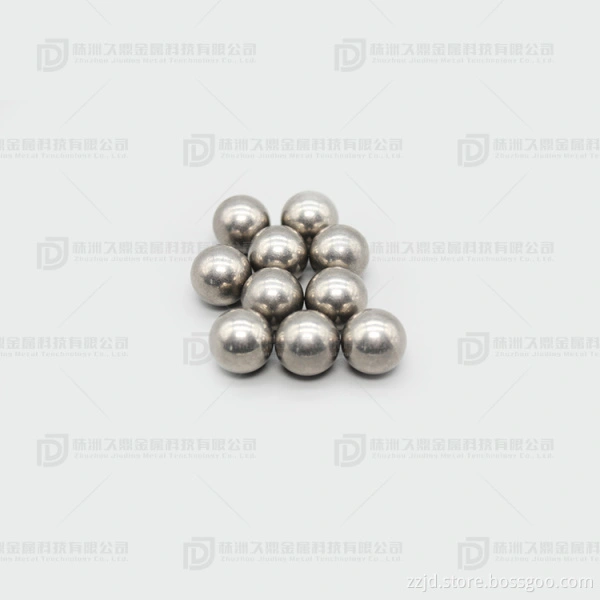
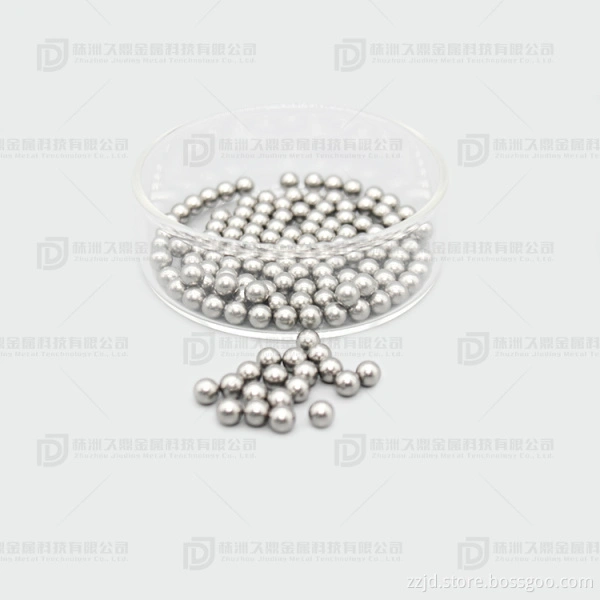
A tungsten alloy ball is a precision spherical component manufactured from high-density tungsten heavy alloys. Typically composed of 90-95% tungsten with nickel, iron, or copper as binding agents, these balls offer exceptional density ranging from 17.0 to 18.0 g/cm³—nearly twice that of steel. This unique combination of extreme weight and compact size makes them indispensable in applications requiring maximum mass in minimal volume.
Unlike standard steel or ceramic bearings, tungsten alloy balls provide superior radiation shielding properties and excellent corrosion resistance. Their high melting point (over 3000°C for pure tungsten) and hardness make them suitable for harsh industrial environments where other materials would fail. Buyers sourcing tungsten alloy spheres for counterweight applications benefit from their ability to reduce overall system volume while maintaining precise weight specifications.
These precision-engineered components serve critical roles across aerospace, medical equipment, oil & gas drilling, military defense, and high-end sports equipment. The material's non-toxic nature and environmental friendliness further expand their applicability in regulated industries where safety compliance is paramount.
Zhuzhou Jiuding Metal Technology Co., Ltd. brings over two decades of manufacturing expertise to every tungsten alloy ball production batch. Established in 2001, our facility combines advanced Metal Injection Molding (MIM) technology with precision pressing techniques to deliver spherical components that meet the tightest dimensional tolerances required by global buyers.
Our certified quality management systems ensure consistent product excellence:
Backed by a dedicated R&D group led by materials science professors and senior engineers, we maintain close collaboration with Central South University's Academy. This academic partnership ensures our tungsten alloy sphere manufacturing techniques remain at the forefront of national and international industry standards.
Selecting the correct tungsten alloy balls for your application requires careful consideration of several technical parameters. The wrong specification can lead to performance issues, premature wear, or failure to meet regulatory requirements. Our procurement guidance helps you make informed decisions that optimize both performance and total cost of ownership.
Choose between 85%, 90%, 93%, or 95% tungsten content based on your weight-to-volume ratio needs. Higher tungsten percentages provide greater density but may affect machinability.
Precision grades range from standard commercial tolerances to ultra-precision specifications. Critical applications like medical devices and aerospace require tighter diameter and sphericity controls.
Surface roughness impacts friction, wear resistance, and aesthetic appearance. Mirror-finish options are available for visible applications such as sports equipment and jewelry.
Nickel-iron binders offer balanced properties, while copper-based binders enhance thermal conductivity. Select based on your application's magnetic, thermal, and corrosion requirements.
Use this comprehensive checklist when evaluating tungsten alloy ball suppliers to ensure you select a partner who can meet your quality, delivery, and compliance requirements.
Confirm ISO 9001, ISO 13485 (if medical), and other relevant certifications are current and valid.
Supplier should provide third-party density test reports for each production batch.
Verify tolerance capabilities match your application requirements (typically ±0.05mm to ±0.005mm).
Metal Injection Molding capability enables complex geometries and consistent repeatability at scale.
Access to engineering support for custom specifications and non-standard product development.
Confirm production capacity and historical on-time delivery rates for order fulfillment.
Proven track record exporting to your region (USA, Canada, Japan, EU markets preferred).
Ability to produce non-elevation products and custom sizes beyond standard catalog offerings.
Professional packaging that prevents damage during international shipping and storage.
Procuring tungsten alloy balls presents unique challenges that inexperienced buyers often encounter. Understanding these common pitfalls helps you avoid costly mistakes, delayed shipments, and suboptimal product performance.
Low-quality suppliers may deliver varying tungsten content percentages between batches, leading to unpredictable weight distribution in your final assembly. Always request density certificates and perform incoming inspection tests.
Inadequate grinding and polishing processes result in out-of-round spheres that cause vibration, noise, and premature wear in bearing or rotational applications. Specify minimum roundness tolerances in your purchase agreement.
Using nickel-iron binders in non-magnetic applications or copper binders where corrosion resistance is critical leads to functional failures. Clearly communicate your application environment to your supplier before ordering.
Custom tungsten alloy sphere manufacturing requires multiple processing stages including powder preparation, MIM forming, sintering, grinding, and polishing. Plan for realistic lead times of 4-8 weeks for custom orders.
Tungsten alloy balls are extremely dense and heavy. Improper packaging can damage containers and create shipping hazards. Ensure your supplier uses industry-standard heavy-duty packaging with proper weight labeling.
The unique properties of tungsten alloy balls—extreme density, radiation shielding, corrosion resistance, and non-toxicity—make them essential components across diverse industrial sectors worldwide.
Compact high-density spheres enable precise aircraft control surface balancing and missile guidance system calibration without adding bulk to critical assemblies.
ISO 13485-certified tungsten alloy spheres provide effective gamma-ray and X-ray shielding in brachytherapy sources, imaging equipment, and radioactive isotope containers.
Heavy alloy spheres serve as weighting agents in drilling mud and stabilizer components, enabling deeper well penetration in challenging geological formations.
Used in golf club heads, dart barrels, and fishing sinkers where maximum weight in minimal volume improves athletic performance and casting distance.
High-hardness tungsten alloy balls reduce friction and wear in high-speed spindles, gyroscopes, and precision rotary tables requiring long service intervals.
Engine crankshaft balancing, transmission components, and EV battery pack stabilization benefit from the predictable density characteristics of tungsten alloys.
When sourcing tungsten alloy balls from China, selecting a manufacturer with proven expertise, international certifications, and advanced production capabilities is critical. Here's why global buyers trust Zhuzhou Jiuding Metal Technology Co., Ltd.
Our facility operates internationally advanced Metal Injection Molding (MIM) and pressing technologies, enabling us to manufacture both standard catalog products and highly customized non-elevation items. This flexibility reduces your tooling costs and shortens time-to-market for new product developments.
Our R&D team, led by materials science professors and senior engineers, maintains active cooperation with Central South University's Academy. This ensures our tungsten alloy ball production methods incorporate the latest scientific advancements and maintain competitive pricing through continuous process optimization.
With established export relationships in America, Canada, Japan, and other international markets, we understand the quality expectations, documentation requirements, and logistics standards of global buyers. Your procurement workflow is simplified by our experience with cross-border trade compliance.
We adhere to "quality first, all staff participation, sincere service, customer-orientation" as our working criterion. Every team member is committed to meeting or exceeding your expectations, providing best price competitiveness without compromising the integrity of our tungsten alloy spheres.
Get answers to the most common questions buyers ask about tungsten alloy ball specifications, ordering, and applications.
Tungsten alloy balls typically have densities ranging from 14.0 to 18.0 g/cm³, depending on the tungsten content percentage. Common grades include W90 (17.0-17.2 g/cm³), W93 (17.5-17.8 g/cm³), and W95 (17.8-18.0 g/cm³). Higher tungsten percentages provide greater density but may affect machinability and cost. Our standard offerings cover the full spectrum to match your specific weight requirements.
We offer tungsten alloy balls in various diameters, typically ranging from 1mm to 50mm for standard products. Custom sizes outside this range are available through our MIM and pressing technologies. Minimum order quantities may vary for non-standard dimensions. Contact our engineering team for specific size availability and pricing for your application requirements.
Yes. Beyond standard spherical shapes, our Metal Injection Molding technology enables production of various non-elevation products including custom geometries, irregular shapes, and complex profiles. This capability is particularly valuable for specialized applications in aerospace, medical devices, and military equipment where off-the-shelf solutions do not meet design specifications.
Zhuzhou Jiuding holds ISO 9001 (quality management), ISO 14001 (environmental management), ISO 45001 (occupational health and safety), and ISO 13485 (medical device quality management) certifications. These certifications demonstrate our commitment to consistent quality, environmental responsibility, worker safety, and medical-grade product standards applicable to healthcare equipment manufacturers.
Standard catalog items typically ship within 2-3 weeks. Custom tungsten alloy sphere manufacturing orders generally require 4-8 weeks depending on complexity, quantity, and finishing requirements. Rush orders may be accommodated based on production schedule availability. We recommend initiating discussions with our sales team early in your procurement planning cycle to ensure timely delivery.
Yes. Our tungsten alloy products are non-toxic and environmentally friendly, making them suitable for medical equipment applications. With ISO 13485 certification, we meet the stringent quality management requirements for medical device components. Tungsten's biocompatibility and radiation shielding properties make it an ideal material for brachytherapy sources, imaging equipment shielding, and surgical instrument counterweights.
Quality control is embedded throughout our manufacturing process. Each batch undergoes rigorous testing including density verification, dimensional measurement, surface finish inspection, and material composition analysis. Our ISO 9001-certified quality management system ensures traceability from raw material sourcing through final shipment. Third-party testing reports are available upon request for international buyers requiring additional verification.
About Us
Related Products List
Contact Us

Privacy statement: Your privacy is very important to Us. Our company promises not to disclose your personal information to any external company with out your explicit permission.
Fill in more information so that we can get in touch with you faster
Privacy statement: Your privacy is very important to Us. Our company promises not to disclose your personal information to any external company with out your explicit permission.