


Please Leave Us A Message
Privacy statement: Your privacy is very important to Us. Our company promises not to disclose your personal information to any external company with out your explicit permission.


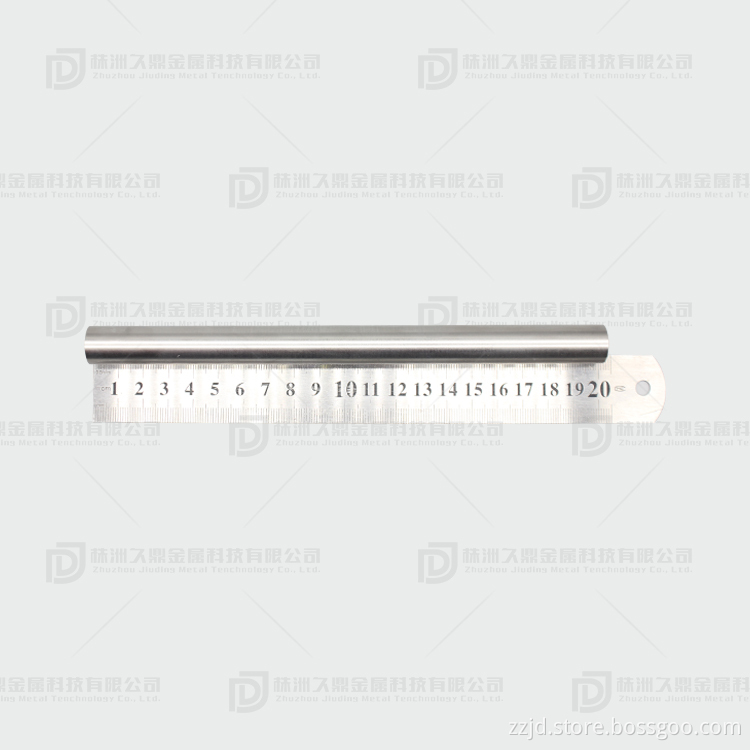
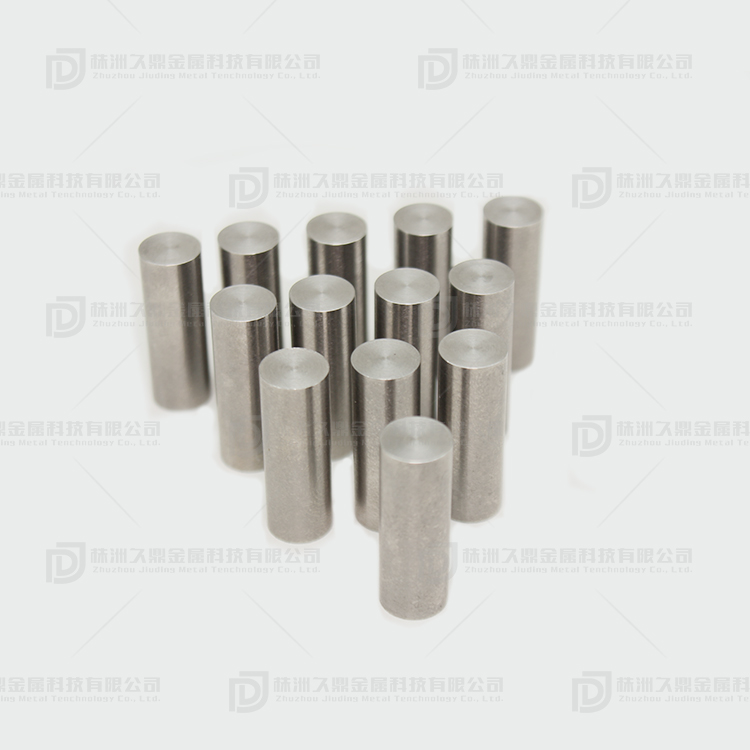
A tungsten alloy knife rod is a high-performance structural component engineered for extreme durability and precision. Composed of over 90% tungsten with nickel, copper, or iron binders, this material offers exceptional density and hardness, making it ideal for demanding industrial applications where standard steel fails.
Unlike conventional metals, our knife-grade tungsten heavy alloy rods maintain their shape under intense pressure and heat. This ensures that tools and components manufactured from these rods deliver consistent performance, reducing downtime and maintenance costs for your production line.
Zhuzhou Jiuding Metal Technology Co., Ltd. leverages advanced pressing and Metal Injection Molding (MIM) technologies to produce these rods with tight tolerances, ensuring every batch meets the rigorous standards required by aerospace, medical, and automotive sectors.
Our manufacturing facility operates under ISO 9001, ISO 14001, ISO 45001, and ISO 13485 certifications. This multi-standard compliance guarantees that every tungsten alloy rod produced meets international safety, environmental, and quality benchmarks.
Backed by R&D leadership from Central South University, we employ strict quality control protocols at every stage—from raw material sourcing to final machining. This scientific approach minimizes defect rates and ensures batch-to-batch consistency, critical for your supply chain reliability.
We offer both standard and custom non-elevation products, allowing you to source specialized high-density tungsten components without compromising on lead times or minimum order quantities.
Selecting the right partner for tungsten heavy alloy procurement requires evaluating more than just price. Buyers should prioritize suppliers with in-house R&D capabilities and proven track records in complex geometries.
By choosing a manufacturer with advanced technology like ours, you reduce the risk of supply chain disruptions and ensure long-term compatibility with your product specifications.
Use this checklist to evaluate potential suppliers for tungsten alloy knife rods and other heavy metal components before finalizing contracts.
Confirm tungsten content percentage and binder type matches your application needs.
Request test reports verifying density (typically 17-18 g/cm³) and Rockwell hardness.
Ensure machining capabilities meet your dimensional tolerance requirements.
Verify production capacity and lead times for bulk orders.
Check for ISO 9001, ISO 13485, or industry-specific certifications.
Assess if they can assist with custom designs or material selection.
Tungsten alloy rods are versatile materials used across high-tech industries due to their unique combination of density, strength, and thermal stability.
Used in radiation shielding, surgical instruments, and diagnostic imaging components due to non-toxicity and high attenuation properties.
Ideal for counterweights, ballast, and missile guidance systems where space is limited but mass is critical.
Employed in downhole weighting materials and drilling equipment parts to withstand high pressure and temperature environments.
Used in high-end golf club heads, fishing weights, and dart tips to improve balance and performance through concentrated mass.
Applications include transmission gears, clutch plates, and vibration dampeners to enhance vehicle efficiency and safety.
Used in heat sinks and electronic packaging materials due to adjustable thermal expansion coefficients matching silicon.
Based on industry standards and buyer needs, here are key recommendations for sourcing tungsten alloy rods.
Suppliers with direct ties to research institutions (like Central South University) offer superior technical support and innovative solutions for custom alloy formulations.
Choose suppliers who handle everything from raw material processing to final machining. This reduces communication gaps and ensures quality control at every step.
Select manufacturers with a proven track record of exporting to regions like North America and Japan, ensuring compliance with international shipping and quality standards.
A supplier holding ISO 9001, 14001, 45001, and 13485 demonstrates a comprehensive commitment to quality, environment, safety, and medical-grade standards.
Our tungsten heavy alloy rods typically have a density ranging from 17.0 to 18.0 g/cm³, depending on the specific alloy composition and manufacturing process. This high density is crucial for applications requiring maximum mass in minimal volume.
Yes. Utilizing both pressing technology and Metal Injection Molding (MIM), we can produce standard rods as well as complex, non-elevation custom shapes. Our R&D team works closely with clients to optimize designs for manufacturability.
We are certified to ISO 9001 (Quality Management), ISO 14001 (Environmental Management), ISO 45001 (Occupational Health and Safety), and ISO 13485 (Medical Devices). These certifications ensure our processes meet global regulatory standards.
Tungsten alloy offers significantly higher density (nearly twice that of steel), greater hardness, and better thermal stability. It also provides excellent radiation shielding and corrosion resistance, making it ideal for harsh environments where steel would fail.
Quality control is integrated into every stage, from raw material inspection to final machining. Our team, led by senior engineers and materials science professors, conducts rigorous testing for density, hardness, and dimensional accuracy to ensure every batch meets specifications.
Yes, every shipment includes detailed material test reports (MTR) documenting chemical composition, physical properties, and test results. This documentation supports your own quality assurance and regulatory compliance processes.
About Us
Related Products List
Contact Us

Privacy statement: Your privacy is very important to Us. Our company promises not to disclose your personal information to any external company with out your explicit permission.
Fill in more information so that we can get in touch with you faster
Privacy statement: Your privacy is very important to Us. Our company promises not to disclose your personal information to any external company with out your explicit permission.