


Please Leave Us A Message
Privacy statement: Your privacy is very important to Us. Our company promises not to disclose your personal information to any external company with out your explicit permission.


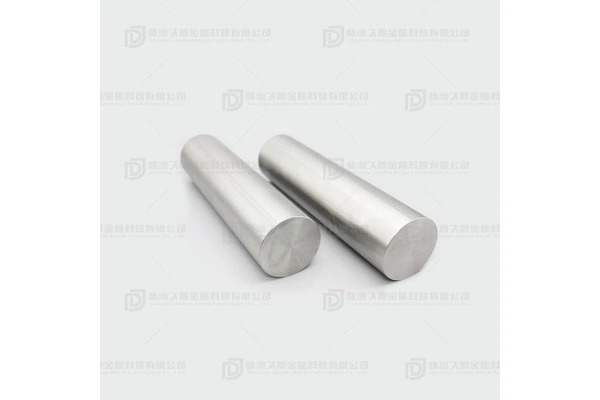
A steel making tungsten alloy rod is a specialized metallurgical tool designed for continuous casting processes in the steel industry. It serves as a critical component for mold vibration and energy transmission, ensuring the stability of the casting process.
Zhuzhou Jiuding Metal Technology Co., Ltd. manufactures these rods using high-density tungsten heavy alloys. Unlike traditional materials, our tungsten alloy casting components offer superior density and hardness, which directly translates to longer service life and reduced downtime for steel mills. The high melting point and anti-corrosion properties ensure reliability even in extreme thermal environments.
Our tungsten alloy rods for steel molds provide exceptional mass-to-volume ratios. This ensures efficient energy transfer during the vibration of the continuous casting mold, leading to smoother surface finishes on steel products.
Engineered with high hardness and wear resistance, our rods withstand the harsh conditions of molten steel environments. This durability significantly extends replacement intervals, lowering your total cost of ownership.
Backed by ISO 9001 and advanced MIM technology, we deliver precise dimensions and consistent material properties. This precision ensures perfect fitment in your existing casting equipment.
At Zhuzhou Jiuding Metal Technology Co., Ltd., quality is not just a standard—it is our core philosophy. Established in 2001, we have built a reputation for delivering reliable tungsten heavy alloy solutions to global markets including America, Canada, and Japan.
Our manufacturing process integrates advanced Metal Injection Molding (MIM) and pressing technologies. This allows us to produce complex geometries with tight tolerances, essential for the precise demands of steelmaking applications.
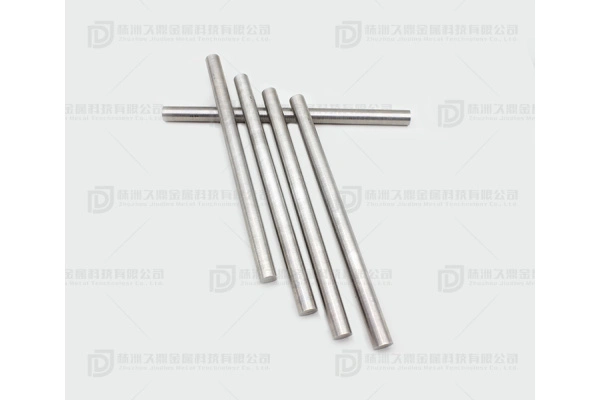
Selecting the right supplier for tungsten alloy rods for steel molds requires careful evaluation of technical capability and production history. Buyers should prioritize suppliers with established R&D teams and proven track records in the refractory industry.
Material Purity: Ensure the supplier uses high-grade tungsten powder for maximum density and radiation protection capabilities if needed.
Manufacturing Technology: Advanced MIM (Metal Injection Molding) technology allows for more complex shapes and better surface finishes compared to traditional pressing methods.
Customization Ability: A capable supplier should offer OEM services to meet specific dimensional requirements for your continuous casting machines.
Verify that the tungsten alloy casting components meet your specific density and hardness requirements. Check for ISO certifications (9001, 14001, 45001) to ensure consistent quality management.
Assess the supplier's ability to handle large orders with short lead times. Look for companies with strong funding and advanced equipment like those used by Zhuzhou Jiuding.
Ensure the supplier provides technical guidance for installation and maintenance. A partner who offers "sincere service" and customer-oriented support can prevent costly operational delays.
Evaluate the total cost of ownership, not just the unit price. Higher quality tungsten rods last longer, reducing replacement frequency and overall spending.
Premature failure is often due to inferior material purity or incorrect manufacturing processes. Low-density alloys may not transmit energy efficiently, leading to uneven casting. Our tungsten heavy alloy solutions undergo strict quality control to prevent such issues.
Molten steel and fluxes can corrode standard metals rapidly. Tungsten alloys offer excellent anti-corrosion properties, but only if manufactured correctly. We use advanced pressing and sintering techniques to ensure a dense, non-porous structure that resists chemical attack.
Importing without verification can lead to receiving substandard materials that damage your casting equipment. Always choose suppliers with international certifications and a history of exporting to reputable markets like America, Canada, and Japan.
Primary application for tungsten alloy rods for steel molds. Used in continuous casting molds for vibration and energy transmission, improving steel surface quality.
Due to high density and radiation shielding properties, our alloys are used in medical imaging devices and radiotherapy collimators.
Used in counterweights, ballast, and military applications where high density and small volume are critical for performance.
Providing reliable counterbalance weights for drilling equipment, ensuring stability and efficiency in harsh underground environments.
Used in high-performance sports equipment (darts, fishing weights) and electronic components due to precise machining capabilities.
Application in vehicle counterweights and safety components, leveraging the non-toxic and eco-friendly nature of our tungsten products.
We recommend choosing a supplier with a comprehensive product range and strong R&D backing. Zhuzhou Jiuding stands out for its integration of university-level research with industrial-scale manufacturing.
The primary advantage is high density and energy transmission efficiency. Tungsten alloy rods effectively vibrate the mold, preventing steel from sticking and ensuring a smooth, high-quality surface finish on the cast steel products.
Yes, we offer full OEM customization. Using our advanced Metal Injection Molding (MIM) technology, we can manufacture tungsten alloy rods for steel molds in various non-standard sizes and shapes to fit your specific machinery.
Our company is certified to ISO 9001 (Quality), ISO 14001 (Environment), ISO 45001 (Occupational Health & Safety), and ISO 13485 (Medical Devices). These certifications guarantee consistent quality and safe manufacturing practices.
Tungsten heavy alloys have a density typically ranging from 17.0 to 18.0 g/cm³, which is significantly higher than steel (7.8 g/cm³) and copper (8.9 g/cm³). This high density allows for smaller, lighter components to achieve the same mass, optimizing space and weight in your equipment.
About Us
Related Products List
Contact Us

Privacy statement: Your privacy is very important to Us. Our company promises not to disclose your personal information to any external company with out your explicit permission.
Fill in more information so that we can get in touch with you faster
Privacy statement: Your privacy is very important to Us. Our company promises not to disclose your personal information to any external company with out your explicit permission.