


Please Leave Us A Message
Privacy statement: Your privacy is very important to Us. Our company promises not to disclose your personal information to any external company with out your explicit permission.


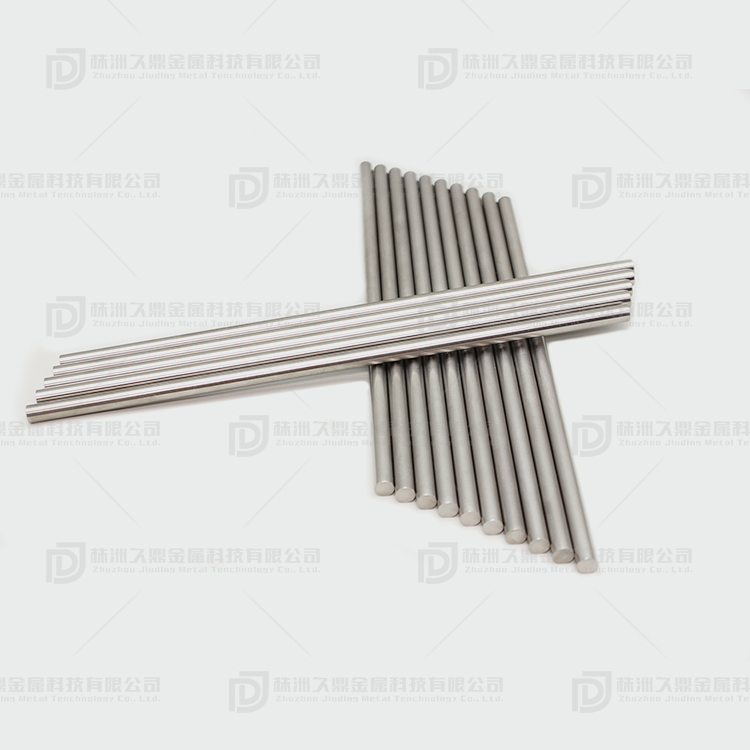
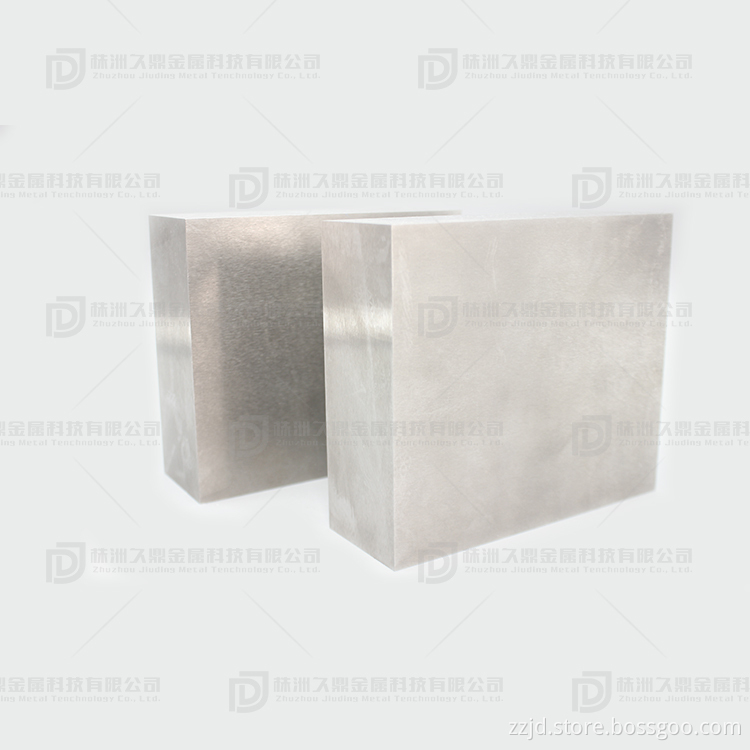
Tungsten alloy ballast for aircraft represents the pinnacle of aerospace engineering materials, offering unmatched density and precision for flight stability. Unlike traditional lead or steel weights, tungsten heavy alloy counterweights provide superior performance in critical aviation applications where space is limited and weight accuracy is paramount.
Manufactured from high-density tungsten alloys (typically 90% to 97.5% tungsten), these components are engineered to meet rigorous aerospace standards. Their exceptional density allows for smaller, more compact ballast solutions that integrate seamlessly into modern aircraft control surfaces, tail assemblies, and wing structures without compromising aerodynamic efficiency.
The use of tungsten alloy ballast ensures precise center-of-gravity management, enhancing flight safety and fuel efficiency. For aircraft manufacturers and maintenance providers, choosing certified tungsten alloy solutions means investing in long-term reliability and compliance with international aviation regulations.
Zhuzhou Jiuding Metal Technology Co., Ltd. stands as a leader in aerospace-grade tungsten alloy production, backed by comprehensive international certifications including ISO 9001, ISO 14001, ISO 45001, and ISO 13485. These certifications validate our commitment to quality management, environmental responsibility, occupational health, and medical device precision – all critical for aerospace component suppliers.
Our state-of-the-art facility employs cutting-edge Metal Injection Molding (MIM) and advanced pressing technologies, enabling us to produce complex geometries with tight tolerances essential for aircraft ballast applications. This technological capability ensures consistent batch-to-batch quality, reducing procurement risk for aviation manufacturers.
Supported by a research team led by materials science professors and senior engineers, with close cooperation with Central South University, we continuously innovate in tungsten alloy formulations. This R&D strength translates to faster problem-solving, customized solutions, and access to the latest material science advancements for our clients.
Select suppliers who guarantee density consistency within ±0.05 g/cm³. For aircraft applications, even minor density variations can affect balance calculations. Request mill certificates and third-party testing reports to verify material composition and density specifications before committing to large orders.
Ensure your supplier holds valid ISO 9001, AS9100, or equivalent aerospace certifications. These credentials demonstrate adherence to strict quality management systems required in aviation supply chains. Verify certification validity and scope through independent databases.
Prioritize manufacturers with dedicated engineering support teams who can assist with custom ballast design, weight distribution analysis, and material selection. Strong technical collaboration reduces development time and minimizes integration risks during aircraft manufacturing or maintenance.
Evaluate supplier manufacturing capacity and lead times to ensure they can meet your project timelines. Look for facilities with automated production lines, multiple shift capabilities, and proven track records of on-time delivery for aerospace clients.
Choose partners with comprehensive inspection protocols, including X-ray testing, dimensional verification, and surface finish analysis. Request sample batches for evaluation before placing full production orders to assess quality consistency firsthand.
Opt for suppliers providing complete traceability documentation, including raw material sources, processing history, and test results. Transparent supply chains reduce compliance risks and simplify audit processes for aviation regulatory requirements.
Look for suppliers with over 20 years of industry experience, such as Zhuzhou Jiuding Metal Technology Co., Ltd., established in 2001. Long-standing companies demonstrate financial stability, accumulated expertise, and proven resilience in serving demanding aerospace markets across America, Canada, Japan, and other regions.
Prioritize manufacturers offering end-to-end services from raw material processing to precision machining. Integrated operations reduce supply chain complexity, improve quality control, and enable faster response to customization requests. Look for companies with both MIM and pressing technology capabilities.
Value suppliers maintaining close cooperation with leading universities like Central South University. Academic partnerships indicate commitment to innovation, access to cutting-edge research, and ability to solve complex material science challenges that arise in specialized aerospace applications.
Select manufacturers with established export operations to major aviation markets. International experience demonstrates understanding of diverse regulatory requirements, cultural competence in communication, and proven ability to navigate complex logistics for time-sensitive aerospace deliveries.
Primary application includes aircraft control surface balancing, tail assembly counterweights, wing ballast, and rotor blade compensation. Tungsten alloy's high density enables precise weight placement in confined spaces while maintaining structural integrity under extreme flight conditions.
Used in military aircraft ballast systems, weapon guidance equipment, and defense electronics shielding. The combination of high density and radiation protection properties makes tungsten alloys ideal for specialized military applications requiring both weight and shielding functions.
Applied in radiation therapy machines, CT scanners, and surgical instruments where precise weighting and radiation attenuation are critical. Medical-grade tungsten alloys meet strict biocompatibility and purity standards required for healthcare applications.
Utilized in downhole tools, logging equipment, and drilling instrumentation where high density enables better tool positioning and improved measurement accuracy in challenging well environments.
Employed in high-performance fishing weights, golf club heads, dart barrels, and sailing boat keels where compact weight distribution enhances athletic performance and equipment precision.
Found in precision machinery components, vibration dampening systems, and conveyor belt balancing where consistent weight characteristics improve operational efficiency and product quality.
Tungsten alloy offers significantly higher density (17-19 g/cm³ vs 11.3 g/cm³ for lead), allowing for smaller, more compact ballast components that fit precisely in constrained aircraft spaces. Unlike lead, tungsten alloy is environmentally friendly, non-toxic, and eliminates disposal concerns associated with toxic heavy metals. The superior mechanical properties also provide better durability and resistance to deformation under stress.
Aerospace-grade tungsten alloys typically range from 17.0 to 18.8 g/cm³, depending on the specific alloy composition (W-Ni-Fe or W-Ni-Cu systems). Premium suppliers maintain density tolerances within ±0.05 g/cm³ to ensure precise weight calculations for flight balance requirements. Always request material test certificates specifying exact density values for your application.
Essential certifications include ISO 9001 for quality management, AS9100 for aerospace-specific requirements, and potentially ISO 13485 if supplying medical aircraft components. Additional qualifications may include NADCAP accreditation for heat treating or special processes. Verify all certifications are current and cover the specific products you intend to purchase.
Yes, experienced manufacturers offer full customization services including custom shapes, sizes, weights, and mounting configurations. Advanced technologies like Metal Injection Molding (MIM) enable complex geometries with tight tolerances. Provide detailed specifications or CAD drawings to your supplier for accurate quoting and prototyping.
Standard lead times range from 15-30 days for stock items and 30-60 days for custom orders, depending on complexity and quantity. Rush orders may be available for urgent requirements. Discuss your timeline early in the procurement process to allow suppliers to plan production schedules accordingly and ensure timely delivery.
Compared to steel (7.8 g/cm³) or brass (8.5 g/cm³), tungsten alloy provides 2-3 times the density in the same volume**, enabling significant size reduction. Against depleted uranium, tungsten offers comparable density without radioactivity concerns. While initial cost may be higher than conventional materials, the total lifecycle value through reduced installation costs, improved performance, and regulatory compliance often favors tungsten alloy solutions.
About Us
Related Products List
Contact Us

Privacy statement: Your privacy is very important to Us. Our company promises not to disclose your personal information to any external company with out your explicit permission.
Fill in more information so that we can get in touch with you faster
Privacy statement: Your privacy is very important to Us. Our company promises not to disclose your personal information to any external company with out your explicit permission.