


Please Leave Us A Message
Privacy statement: Your privacy is very important to Us. Our company promises not to disclose your personal information to any external company with out your explicit permission.


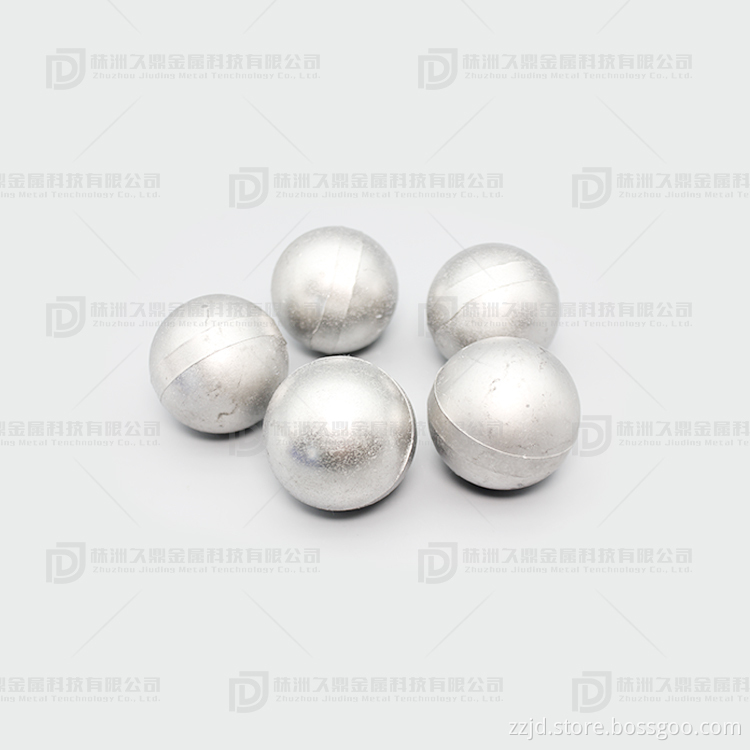
A tungsten alloy cylinder is a precision-engineered component crafted from an alloy composed primarily of tungsten, often combined with metals like nickel, copper, or iron to optimize density and mechanical properties. These cylinders are renowned for their exceptional density—often exceeding 17-18 g/cm³—which makes them significantly heavier than steel or lead for the same volume.
This unique characteristic allows manufacturers to achieve high mass in compact spaces, which is critical for applications requiring precise weight distribution, radiation shielding, or rotational inertia. At Zhuzhou Jiuding Metal Technology Co., Ltd., we specialize in manufacturing these high-performance components using advanced Metal Injection Molding (MIM) and pressing technologies, ensuring that every tungsten alloy cylinder meets rigorous international standards for aerospace, medical, and industrial applications.
Whether you need standard cylindrical shapes or custom non-elevation designs, our products deliver superior performance in environments where durability, heat resistance, and radiation protection are paramount.
Our facility utilizes state-of-the-art Metal Injection Molding (MIM) and high-pressure pressing technology. This allows us to produce complex geometries with tight tolerances, ensuring that your tungsten alloy cylinder dimensions are precise and consistent batch after batch.
We are certified to ISO 9001, ISO 14001, ISO 45001, and ISO 13485 standards. This multi-certification approach ensures that our quality management systems meet the strictest requirements for medical, environmental, and safety compliance, giving you peace of mind regarding product reliability.
Backed by a research group led by materials science professors and senior engineers, and in close cooperation with Central South University, our products are at the leading edge of national and international technology. This expertise directly translates to superior material properties in your tungsten heavy alloy components.
With over two decades of experience, we reliably supply to markets in America, Canada, Japan, and beyond. Our established logistics and export processes ensure smooth international transactions and timely delivery for your bulk orders.
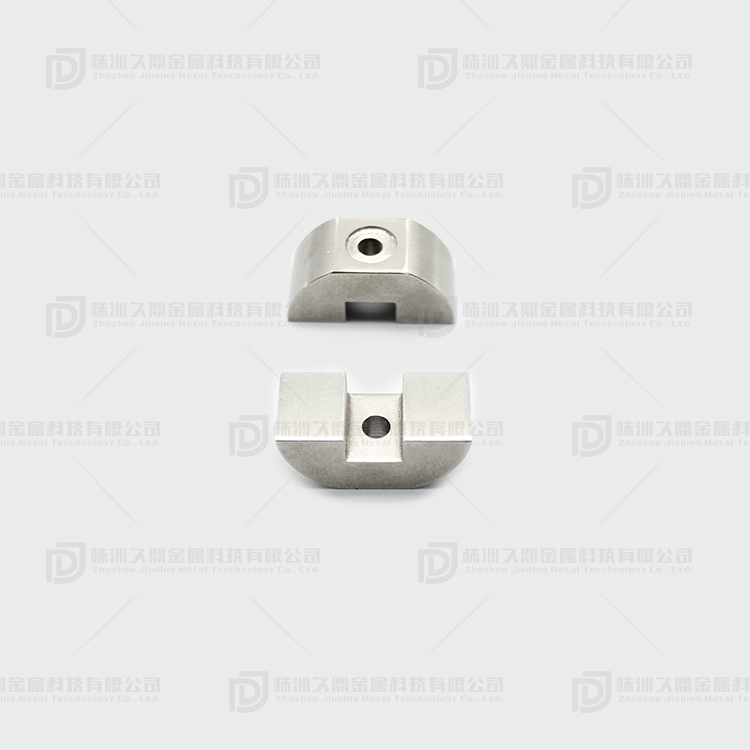
Selecting the right supplier for tungsten alloy cylinders requires more than just comparing price per kilogram. You must evaluate the manufacturer's technical capabilities, certification depth, and ability to customize components to your specific engineering drawings.
Ensure your supplier uses advanced methods like Metal Injection Molding (MIM). MIM allows for complex shapes with high density and uniform microstructure, which is critical for consistent performance in radiation shielding or counterweight applications. Ask about their pressing technology and sintering processes to understand the final material integrity.
For industries like medical devices or aerospace, certifications are not optional. Look for suppliers certified to ISO 13485 (medical), ISO 9001 (quality), and ISO 14001 (environmental). These certifications indicate a mature quality management system that reduces your risk of supply chain disruptions.
Standard off-the-shelf parts may not fit your application. A top-tier supplier should offer OEM/ODM services, allowing them to manufacture various non-elevation products and custom sizes based on your specifications. Confirm their R&D team can support engineering challenges during the design phase.
Request mill test certificates (MTC) specifying exact tungsten percentage and alloying elements (Ni, Fe, Cu).
Confirm density matches specified range (typically 17.0-18.5 g/cm³).
Define acceptable tolerances for diameter, length, and concentricity.
Ask about surface finish requirements and available machining capabilities.
Ensure the alloy grade is suitable for your specific use (e.g., radiation shielding vs. counterweight).
Check corrosion resistance and thermal stability data for your operating environment.
Verify production capacity and lead times for your required volume.
Review customer testimonials and export history to key markets.
Compare total landed cost, including shipping, duties, and potential waste.
Consider yield rates from manufacturing processes like MIM to reduce material waste costs.
Ensure clear communication channels for technical queries and issue resolution.
Check return policies and warranty terms for defective batches.
One of the most common issues is variability in material density across different batches. Low-density alloys compromise radiation shielding effectiveness and weight accuracy. Solution: Work with suppliers who use controlled pressing and sintering processes, and request batch-specific density reports.
Improper cooling or rapid temperature changes during manufacturing can cause micro-cracks or surface porosity, weakening the cylinder. Solution: Inspect samples for visual defects before approving bulk orders and choose suppliers with strict quality control protocols.
Tight tolerances are difficult to maintain, especially for long, thin cylinders. Warping during sintering can lead to rejected parts. Solution: Specify tolerances clearly and ask about post-sintering machining capabilities to achieve final dimensions.
Long lead times can disrupt production schedules. Some suppliers underestimate the complexity of tungsten processing. Solution: Partner with established manufacturers like Zhuzhou Jiuding, who have proven track records and efficient production lines.
Established in 2001, this professional joint venture specializes in manufacturing, machining, and sales of tungsten heavy alloys, tungsten copper, and cemented carbide. They offer comprehensive solutions from raw material to finished precision parts.
When evaluating suppliers, prioritize those with integrated manufacturing capabilities. Zhuzhou Jiuding stands out due to its combination of advanced technology, academic partnerships, and global experience. Their ability to produce both standard and custom non-elevation products makes them a versatile partner for diverse industry needs.
Their commitment to "Quality first, all staff participation, sincere service, customer-orientation" ensures that every order receives dedicated attention. With strong funding and international advanced technology, they provide reliable high-quality products and excellent services, reducing your procurement risk and ensuring long-term cooperation.
The density of a tungsten alloy cylinder typically ranges from 17.0 to 18.5 g/cm³, depending on the specific alloy composition (e.g., W-Ni-Fe or W-Ni-Cu). This is significantly higher than steel (~7.8 g/cm³) and lead (~11.3 g/cm³), making it ideal for applications requiring maximum mass in minimal volume.
Yes, manufacturers like Zhuzhou Jiuding offer extensive customization services. Using Metal Injection Molding (MIM) and precision machining, they can produce cylinders in various diameters, lengths, and tolerances according to your engineering drawings. This includes non-standard and complex geometries.
Tungsten alloy cylinders are widely used in aerospace (counterweights, ballast), medical equipment (radiation shielding, collimators), military (armor piercing, guidance systems), oil exploration (gamma ray sources), and sports equipment (high-end darts, fishing weights). Their high density and radiation absorption make them indispensable in these fields.
MIM allows for the production of complex shapes with high precision and excellent surface finish, which is difficult to achieve with traditional powder metallurgy. It also enables near-net-shape forming, reducing machining time and material waste. This results in cost-effective production of intricate tungsten alloy components.
Yes, tungsten is non-toxic and environmentally friendly compared to alternatives like lead. Furthermore, tungsten alloys are fully recyclable. Manufacturers adhering to ISO 14001 standards ensure that production processes minimize environmental impact through proper waste management and energy efficiency.
For general industrial use, ISO 9001 is essential. For medical applications, ISO 13485 is mandatory. Environmental concerns require ISO 14001, and occupational health/safety demands ISO 45001. Reputable suppliers like Zhuzhou Jiolding hold all these certifications, ensuring comprehensive quality and compliance.
About Us
Related Products List
Contact Us

Privacy statement: Your privacy is very important to Us. Our company promises not to disclose your personal information to any external company with out your explicit permission.
Fill in more information so that we can get in touch with you faster
Privacy statement: Your privacy is very important to Us. Our company promises not to disclose your personal information to any external company with out your explicit permission.