


Please Leave Us A Message
Privacy statement: Your privacy is very important to Us. Our company promises not to disclose your personal information to any external company with out your explicit permission.


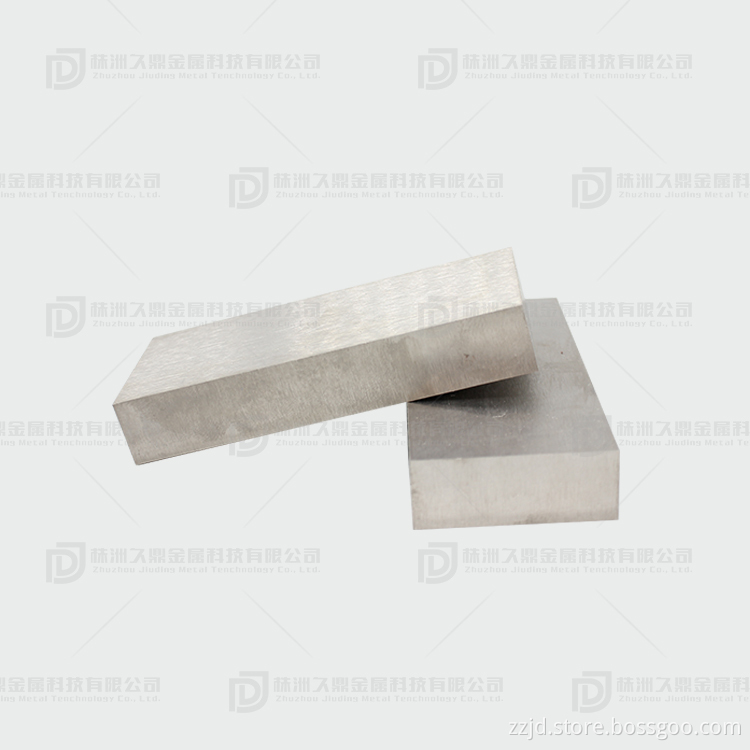
Tungsten alloy material represents the pinnacle of density engineering in modern metallurgy. With densities reaching up to 19.3 g/cm³—nearly twice that of steel—these specialized alloys offer unmatched performance in applications requiring maximum mass in minimal volume.
Zhuzhou Jiuding Metal Technology Co., Ltd. has been a pioneer in tungsten heavy alloy manufacturing since 2001. Our expertise spans from standard industrial grades to complex custom geometries using advanced Metal Injection Molding (MIM) technology.
The unique combination of high melting point, thermal stability, radiation shielding capability, and non-toxic composition makes tungsten alloys indispensable across aerospace, medical equipment, military defense, and precision electronics sectors.
Our production facility operates under ISO 9001, ISO 14001, ISO 45001, and ISO 13485 certifications, ensuring that every batch of tungsten heavy alloy meets international quality standards for medical and industrial applications.
We utilize state-of-the-art MIM technology to produce complex tungsten alloy components with tight tolerances and excellent surface finishes. This process allows for cost-effective mass production of intricate geometries that traditional machining cannot achieve.
Our research team, led by materials science professors from Central South University, ensures continuous innovation in tungsten alloy formulations. This academic collaboration keeps our products at the forefront of national and international technology.
All tungsten alloy products undergo rigorous testing procedures including density verification, hardness measurement, and microstructural analysis. Our quality management system guarantees consistent batch-to-batch performance for critical applications.
Selecting the appropriate tungsten alloy requires careful consideration of density requirements, mechanical properties, and environmental conditions. Our technical team specializes in matching specific alloy compositions to your exact application needs.
Tungsten heavy alloys typically range from 16-19 g/cm³ depending on the binder composition. For counterweight applications, we recommend W-Ni-Fe or W-Ni-Cu systems based on required formability and corrosion resistance.
With melting points exceeding 2800°C, pure tungsten and certain alloys maintain structural integrity at extreme temperatures. This makes them ideal for heating elements, crucibles, and aerospace thermal management components.
For medical and nuclear applications, tungsten's high atomic number provides superior radiation attenuation compared to lead. Our tungsten-copper composites offer customizable shielding thicknesses with improved thermal conductivity.
Tungsten alloys exhibit excellent resistance to chemical attack in harsh environments. The non-toxic nature of tungsten makes it safe for food processing equipment and biomedical implants where lead alternatives are prohibited.
When sourcing tungsten alloy materials, buyers must evaluate multiple technical and commercial factors. Use this comprehensive checklist to ensure you select the right supplier and product specifications for your project.
Verify that suppliers provide complete material test certificates with chemical composition, physical properties, and traceability documentation meeting your industry standards.
Assess whether the supplier offers both standard and custom manufacturing processes including MIM, pressing, CNC machining, and powder metallurgy techniques.
Confirm ISO certifications relevant to your sector, particularly ISO 13485 for medical devices and ISO 9001 for general industrial applications.
Ensure the supplier provides engineering consultation for alloy selection, design optimization, and application-specific problem solving throughout the procurement process.
Evaluate the supplier's production capacity, inventory management, and delivery track record to ensure consistent supply for your manufacturing operations.
Consider total landed cost including material, processing, shipping, and tooling expenses. Advanced manufacturing methods like MIM can reduce per-unit costs for complex parts.
Choosing the right tungsten alloy supplier involves evaluating technical capabilities, quality systems, and global experience. Based on industry standards and buyer requirements, we recommend partnering with manufacturers who demonstrate comprehensive expertise in tungsten metallurgy.
Why choose: Established in 2001 with full vertical integration from raw material processing to finished components. Specializes in tungsten heavy alloys, copper-tungsten composites, and precision MIM parts.
What to look for: When evaluating other suppliers, prioritize companies with demonstrated expertise in tungsten metallurgy, established quality management systems, and proven track records in your target market.
Buyers frequently encounter challenges when sourcing tungsten alloy materials. Understanding these common issues and their solutions helps streamline the procurement process and ensures successful project outcomes.
Problem: Variations in alloy density affecting component performance in weight-sensitive applications.
Solution: Work with suppliers who perform 100% density verification and provide material certificates. Zhuzhou Jiuding uses controlled pressing and sintering processes to maintain consistent density within ±0.1 g/cm³ tolerance.
Problem: Rough surfaces or porosity affecting part functionality and appearance in precision applications.
Solution: Specify appropriate manufacturing processes for your application. MIM technology delivers near-net-shape parts with excellent surface finish, while secondary machining can achieve Ra values below 0.8μm.
Problem: Lead time variability and material shortages disrupting production schedules.
Solution: Partner with established manufacturers maintaining strategic raw material inventories. Companies with integrated production facilities from powder processing to final machining offer greater supply chain resilience.
Problem: Meeting international standards for medical, aerospace, and defense applications.
Solution: Select suppliers with relevant industry certifications and experience in regulated markets. ISO 13485 certification is essential for medical device applications involving tungsten alloy components.
Tungsten alloy materials serve critical roles across diverse industries where their unique properties solve challenging engineering problems. From medical imaging equipment to aerospace components, these advanced materials enable innovations that would be impossible with conventional metals.
Tungsten alloys are essential in X-ray collimators, gamma knife components, and radiotherapy shielding. Their biocompatibility and radiation attenuation make them ideal for diagnostic and therapeutic medical devices.
High-density tungsten alloys are used in aircraft counterweights, missile guidance systems, and armor penetration components. Their inertness and high melting point ensure reliability in extreme operating conditions.
Tungsten alloy weights and tools are critical in downhole logging and drilling applications. Their corrosion resistance and density provide reliable performance in harsh wellbore environments.
Tungsten alloys enhance performance in golf club heads, fishing weights, dart barrels, and jewelry. The compact size and high weight allow designers to create superior products with improved balance and feel.
Get answers to common questions about tungsten alloy materials, procurement processes, and technical specifications from our experienced engineering team.
Tungsten heavy alloys offer exceptional density (16-19 g/cm³), making them ideal for applications requiring maximum mass in minimum volume. They combine high strength with good ductility, excellent thermal stability, and superior radiation shielding properties compared to lead. Unlike steel, they provide significantly higher density without magnetic interference.
MIM technology enables cost-effective production of complex tungsten alloy geometries that would be prohibitively expensive through traditional machining. It achieves near-net-shape parts with excellent dimensional accuracy, reduces material waste, and allows for high-volume manufacturing of intricate components like medical device parts and electronic connectors.
Essential certifications include ISO 9001 for quality management, ISO 14001 for environmental management, and ISO 45001 for occupational health and safety. For medical applications, ISO 13485 certification is mandatory. Additional industry-specific certifications may be required for aerospace, defense, or nuclear applications.
Yes, tungsten alloys can be machined using standard metalworking equipment with appropriate tooling. Welding is possible but requires specialized techniques due to tungsten's high melting point. Most suppliers offer comprehensive machining services including CNC milling, turning, and electrical discharge machining for custom components.
Lead times vary based on order complexity and quantity. Standard catalog items typically ship within 2-3 weeks. Custom MIM parts require 4-6 weeks for tooling and production. Large-volume orders and complex custom geometries may require 8-12 weeks. Expedited services are available for urgent requirements.
Tungsten alloys are non-toxic and environmentally safe, unlike lead-based alternatives. They are fully recyclable without degradation of properties, supporting sustainable manufacturing practices. Many tungsten alloy products contribute to energy efficiency in applications like solar panels and electric vehicles.
About Us
Related Products List
Contact Us

Privacy statement: Your privacy is very important to Us. Our company promises not to disclose your personal information to any external company with out your explicit permission.
Fill in more information so that we can get in touch with you faster
Privacy statement: Your privacy is very important to Us. Our company promises not to disclose your personal information to any external company with out your explicit permission.