


Please Leave Us A Message
Privacy statement: Your privacy is very important to Us. Our company promises not to disclose your personal information to any external company with out your explicit permission.


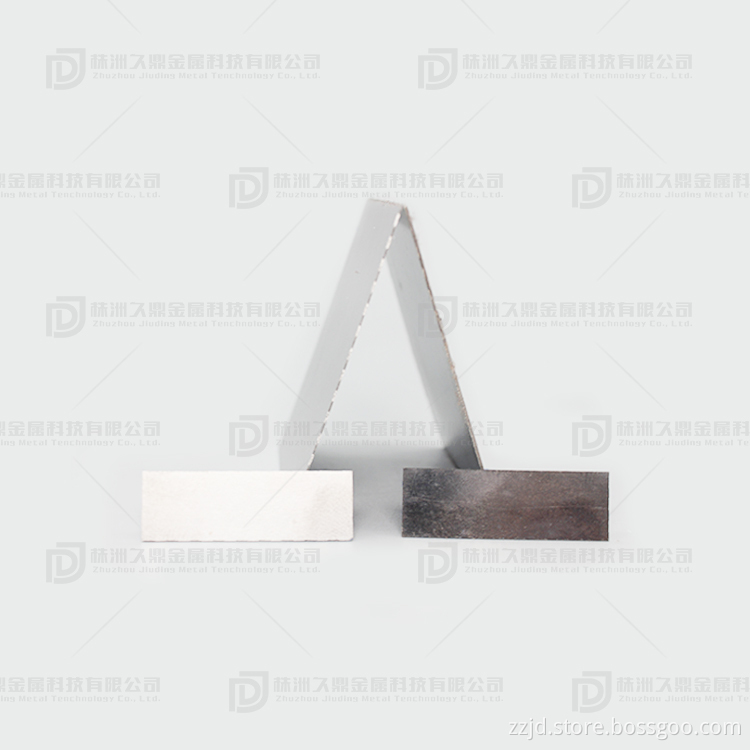
A tungsten alloy plate is a high-density metal sheet engineered for extreme performance in demanding industrial environments. Typically composed of 90-95% tungsten with nickel, iron, or copper, these plates offer exceptional radiation shielding and thermal stability.
For procurement managers, choosing the right tungsten alloy plate supplier ensures you get materials that meet strict aerospace and medical standards while reducing long-term replacement costs.
With densities up to 18 g/cm³, our plates provide superior X-ray and gamma-ray protection compared to lead, eliminating toxicity risks for medical and nuclear applications.
We utilize advanced Metal Injection Molding (MIM) and pressing technologies to deliver custom-shaped plates with tight tolerances, reducing your secondary processing costs.
Engineered to withstand extreme temperatures without warping, ensuring consistent performance in aerospace and high-heat industrial machinery.
ISO 9001, ISO 14001, and ISO 13485 certified manufacturing processes guarantee batch-to-batch consistency and regulatory compliance for global buyers.

Zhuzhou Jiuding Metal Technology Co., Ltd. combines decades of experience with rigorous quality control to produce premium tungsten heavy alloy plates.
Look for suppliers with in-house R&D teams and university partnerships. This ensures they can solve complex engineering challenges rather than just selling standard stock.
Ensure your supplier holds relevant ISO certifications (9001, 13485) that match your industry's regulatory requirements, especially for medical or aerospace parts.
The best partners offer OEM/ODM services, allowing you to source custom shapes and sizes from a single vendor, simplifying your supply chain management.
Confirm the factory has the machinery to handle your volume needs without compromising lead times, ensuring scalable production for large orders.
Used in X-ray machines, CT scanners, and radiotherapy shielding due to non-toxicity and high attenuation properties.
Provides counterweights and ballast in aircraft and satellites, offering high strength-to-weight ratios and thermal resistance.
Essential for armor plating, penetrators, and radiation shielding in sensitive electronic equipment.
Used in downhole tools and gamma ray sources for geological surveying, requiring robust durability.
Low-quality plates may have voids or impurities, reducing shielding effectiveness. Always request density test reports.
Improper storage can lead to oxidation, complicating machining. Choose suppliers with strict packaging protocols.
Standard plates often require extensive post-processing. Partner with manufacturers who offer precision machining to save time.
Long lead times can halt production. Verify the supplier's capacity to handle rush orders and bulk commitments.
Pure tungsten offers higher melting points and electrical conductivity, while tungsten heavy alloys (W90-W95) provide higher density and better radiation shielding, making them ideal for counterweights and medical shielding.
Yes, we offer full OEM/ODM services. Using MIM and pressing technologies, we can produce standard and non-standard plates tailored to your exact dimensions and density requirements.
Our manufacturing process is certified under ISO 9001, ISO 14001, ISO 45001, and ISO 13485, ensuring compliance with international quality, environmental, safety, and medical device standards.
Lead times depend on order volume and complexity. Standard items ship faster, while custom machined parts require additional processing time. We recommend consulting our sales team for specific project timelines.
About Us
Related Products List
Contact Us

Privacy statement: Your privacy is very important to Us. Our company promises not to disclose your personal information to any external company with out your explicit permission.
Fill in more information so that we can get in touch with you faster
Privacy statement: Your privacy is very important to Us. Our company promises not to disclose your personal information to any external company with out your explicit permission.