


Please Leave Us A Message
Privacy statement: Your privacy is very important to Us. Our company promises not to disclose your personal information to any external company with out your explicit permission.


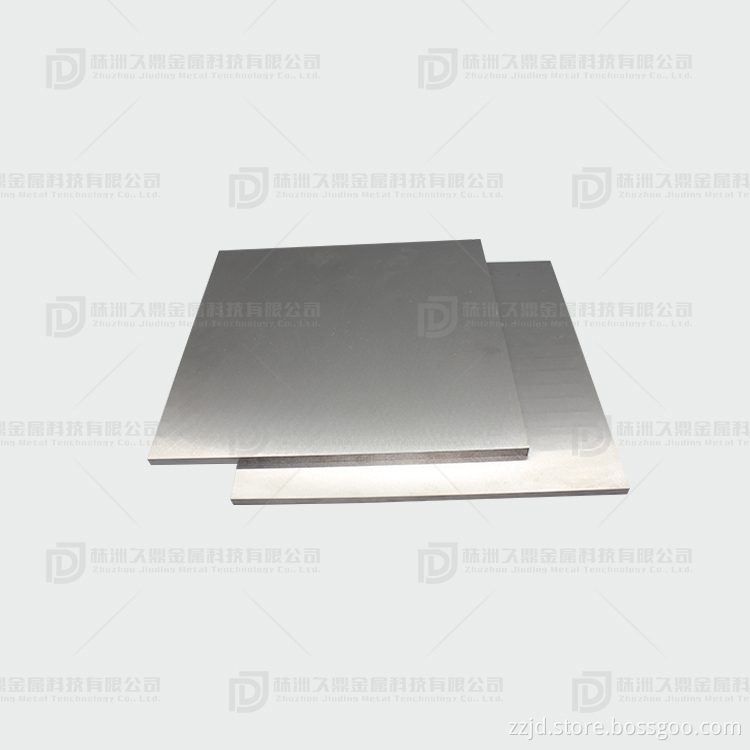
A tungsten alloy sheet is a specialized metal product engineered to provide exceptional density and radiation shielding capabilities in a flat, versatile form factor. Composed primarily of tungsten with small additions of nickel, iron, or copper, this material offers a unique combination of high mass per unit volume and excellent workability.
Unlike pure tungsten, which can be brittle and difficult to machine, tungsten alloys are designed to balance hardness with ductility. This makes them ideal for custom tungsten alloy sheets that require precise machining, bending, and welding for complex industrial components.
These sheets are critical for applications where space is limited but maximum weight and radiation protection are required. They serve as the foundational material for manufacturing custom shields, counterweights, and electronic substrates used across aerospace, medical, and defense sectors.
Zhuzhou Jiuding Metal Technology Co., Ltd. operates under strict international standards. Our facility is certified to ISO 9001, ISO 14001, ISO 45001, and ISO 13485. These certifications ensure that every industrial tungsten alloy sheet produced meets rigorous quality control protocols from raw material sourcing to final delivery.
For medical and aerospace buyers, ISO 13485 certification is particularly vital, as it guarantees traceability and consistency required for sensitive applications. Our quality-first approach minimizes your risk of supply chain disruptions and ensures compliance with global regulatory standards.
Our manufacturing capabilities include both pressing technology and Metal Injection Molding (MIM). This dual-technology approach allows us to produce standard sheets as well as highly complex non-elevation products that traditional methods cannot achieve.
Backed by a research and development group led by materials science professors and senior engineers, we maintain a leading position in national and international markets. We cooperate closely with the Academy of Central South University to continuously improve our tungsten alloy sheet properties, ensuring superior density and mechanical performance for your specific needs.
Selecting the correct tungsten alloy sheet supplier requires evaluating more than just price. You must assess the manufacturer's ability to meet your specific technical requirements for density, thickness, and surface finish.
By prioritizing these factors, you reduce the risk of receiving substandard materials that fail to perform in critical applications.

Use this checklist to evaluate potential suppliers and ensure your procurement process aligns with industry best practices for tungsten alloy sheet purchasing.
Procuring tungsten alloy sheets can present several challenges if not managed correctly. Understanding these common issues helps you avoid costly mistakes and delays.
Low-quality alloys may have voids or impurities, reducing density below specification. This compromises radiation shielding effectiveness. Always request third-party testing certificates.
Improperly processed tungsten alloys can become too brittle for machining. Ensure your supplier uses advanced pressing or MIM technology to maintain ductility.
Long lead times are common with specialized materials. Partner with established manufacturers like Zhuzhou Jiuding, who have robust production lines and global experience.
Tungsten alloy sheets are utilized across diverse industries due to their unique combination of high density, thermal stability, and radiation absorption. Below are key application areas.
| Industry | Application | Benefit |
|---|---|---|
| Medical | Radiation shielding vials, collimators | Compact design reduces patient exposure while maintaining image quality. |
| Aerospace | Counterweights, ballast | High density allows for smaller, lighter components without sacrificing stability. |
| Military | Armor plating, penetrators | Superior hardness and density provide enhanced protection and impact resistance. |
| Electronics | Heat sinks, substrates | Excellent thermal conductivity manages heat in high-power devices. |
| Oil Exploration | Weight bars for drilling tools | Adds necessary weight to drill strings in deep, high-pressure environments. |
| Sports | Golf club heads, darts | Allows for precise weight distribution, improving performance and feel. |
When selecting a partner for tungsten alloy sheet manufacturing, look for a company with proven expertise, global reach, and comprehensive quality assurance.
Why Choose Them: Established in 2001, they specialize in tungsten heavy alloys, copper tungsten, and cemented carbide. Their dual capability in MIM and pressing technology supports both standard and custom tungsten alloy sheet requirements.
With certifications including ISO 9001, ISO 13485, and strong R&D ties to Central South University, they offer reliable quality and innovative solutions for global clients in America, Canada, Japan, and beyond.
Look For: Suppliers who prioritize customer orientation and sincere service. A good partner will provide competitive pricing without compromising on material integrity. They should offer flexible MOQs and clear communication throughout the procurement cycle.
Ensure the supplier has experience exporting to your region and understands local import regulations and standards for tungsten products.
The density of tungsten alloy sheets typically ranges from 16.5 to 18.0 g/cm³, depending on the specific alloy composition (e.g., W-Ni-Fe or W-Ni-Cu). Higher density provides better radiation shielding and weighting capabilities per unit volume.
Yes, tungsten alloy sheets are designed to be machinable. They can be cut, drilled, milled, and bent using standard metalworking tools. However, due to their high hardness, specialized tooling (such as diamond-coated or carbide tools) is recommended for efficient processing.
For general industrial use, ISO 9001 is essential. If you are sourcing for medical equipment, look for ISO 13485 certification. Environmental and safety management certifications (ISO 14001, ISO 45001) indicate a supplier's commitment to sustainable and safe manufacturing practices.
Tungsten alloys offer significantly higher density than lead, allowing for thinner, more compact shielding designs. They are also non-toxic, addressing environmental and health concerns associated with lead. While more expensive upfront, tungsten can lower total cost of ownership due to reduced material volume and easier disposal.
Lead times vary based on order volume and complexity. Standard sheets may be available from stock, while custom sizes or shapes requiring MIM or specific heat treatments may take 2-4 weeks. Establishing a long-term partnership can help secure priority production slots.
About Us
Related Products List
Contact Us

Privacy statement: Your privacy is very important to Us. Our company promises not to disclose your personal information to any external company with out your explicit permission.
Fill in more information so that we can get in touch with you faster
Privacy statement: Your privacy is very important to Us. Our company promises not to disclose your personal information to any external company with out your explicit permission.