


Please Leave Us A Message
Privacy statement: Your privacy is very important to Us. Our company promises not to disclose your personal information to any external company with out your explicit permission.


A tungsten alloy syringe shield is a critical radiation protection component designed to safely store and transport radioactive isotopes in medical imaging facilities. Unlike standard lead shields, tungsten alloys offer superior density and durability, ensuring that nuclear medicine staff and patients are protected from harmful radiation exposure during procedures.
For procurement specialists in the healthcare sector, selecting the right shielding material is not just about compliance—it's about safety efficiency and space optimization. High-density tungsten allows for thinner, lighter shields that provide equivalent or better protection than traditional lead, making them easier to handle in busy clinical environments.
Zhuzhou Jiuding Metal Technology Co., Ltd., established in 2001, specializes in manufacturing these precision components. With advanced Metal Injection Molding (MIM) technology and ISO 13485 certification, we ensure every shield meets rigorous international standards for medical device accessories.
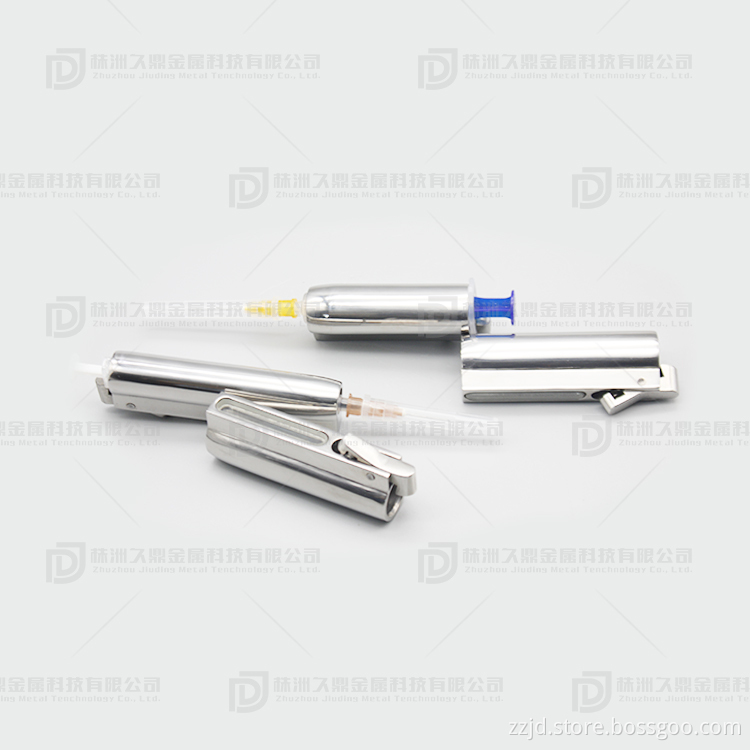
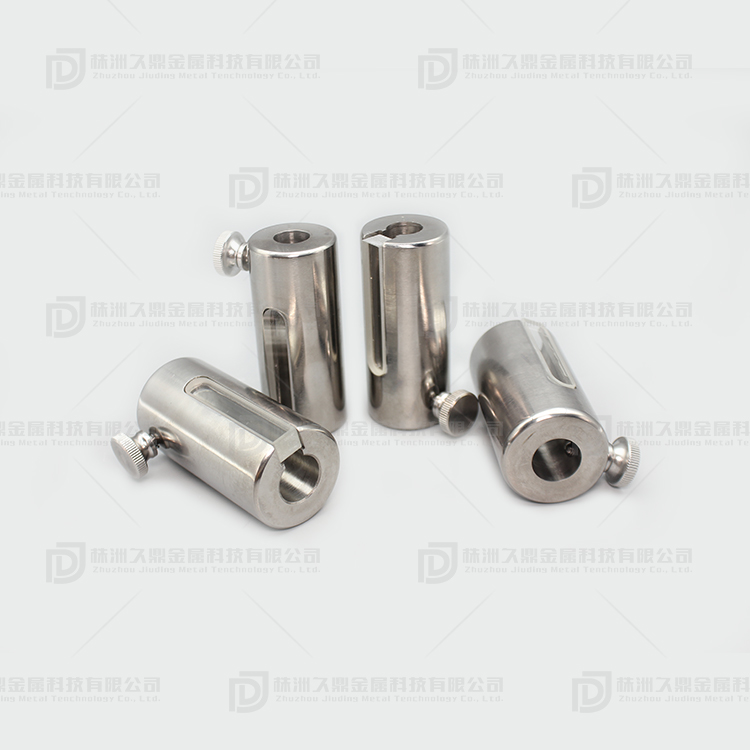
Our production of tungsten alloy syringe shields is backed by over two decades of expertise in refractory metals. We utilize state-of-the-art Metal Injection Molding (MIM) and pressing technologies to create complex geometries with high precision and consistency.
We are certified to ISO 9001, ISO 14001, ISO 45001, and ISO 13485. These certifications guarantee that our manufacturing processes meet the highest standards for quality, environmental responsibility, occupational health, and medical device safety.
Our R&D group, led by materials science professors and senior engineers, collaborates closely with Central South University. This ensures our tungsten alloys maintain leading-edge properties:
Selecting a supplier for medical tungsten shielding components requires evaluating technical capability, regulatory compliance, and supply chain reliability. Here is what professional buyers should prioritize:
Ensure your supplier uses advanced methods like Metal Injection Molding (MIM). MIM allows for precise control over density and shape, which is critical for custom-fit syringe shields that must accommodate various isotope vials without compromising protection.
Verify ISO 13485 certification specifically. This standard is tailored for medical devices and ensures that quality management systems are suitable for products used in healthcare settings. ISO 9001 alone is insufficient for medical applications.
Ask for material test reports. High-quality tungsten alloys should have consistent density and minimal porosity. Our partnership with Central South University guarantees that our raw materials meet strict metallurgical specifications.
Choose a supplier with a proven track record in exporting to regions like America, Canada, and Japan. They will understand international shipping requirements, packaging standards, and compliance documentation needed for customs clearance.
Use this checklist to evaluate potential suppliers and minimize procurement risk when sourcing tungsten alloy syringe shields for your facility.
Procuring specialized radiation shielding components can present challenges. Below are common issues buyers face and how to avoid them:
The Problem: Some suppliers use low-grade tungsten powder with binders that reduce overall density, resulting in inadequate shielding.
The Solution: Request specific gravity test results. Zhuzhou Jiuding uses high-purity tungsten alloys via MIM technology to ensure consistent, high-density protection that meets regulatory limits.
The Problem: Generic shields may not securely hold specific syringe or vial sizes, creating handling risks and potential radiation leaks.
The Solution:: Work with manufacturers who offer OEM/ODM customization. Our advanced pressing and MIM capabilities allow us to tailor internal dimensions precisely to your facility's inventory.
The Problem: Harsh hospital disinfectants can degrade poorly finished tungsten surfaces over time, affecting hygiene and appearance.
The Solution:: Choose suppliers with strict surface treatment protocols. Our products are designed to be anti-corrosion and easy to clean, maintaining integrity in high-turnover medical environments.
The Problem:: Small workshops may lack the capacity to fulfill large orders on time or maintain batch-to-batch consistency.
The Solution:: Partner with established manufacturers like Zhuzhou Jiuding, which has been operating since 2001, with strong funding, advanced technology, and a dedicated R&D team ensuring reliable, scalable production.
When evaluating potential partners for tungsten alloy syringe shield manufacturing, consider these key recommendations based on industry best practices and our experience serving global clients:
| Evaluation Criteria | Recommended Approach | Why It Matters |
|---|---|---|
| Certification Depth | Look for ISO 13485 + ISO 9001 + ISO 14001 | Ensures medical-grade quality, environmental responsibility, and operational safety. |
| Manufacturing Method | Prioritize MIM (Metal Injection Molding) capability | MIM provides superior density control and complex geometry precision compared to traditional pressing. |
| R&D Partnership | Choose suppliers with university research ties | Access to cutting-edge material science ensures long-term product innovation and performance. |
| Global Experience | Select exporters with presence in US, Canada, Japan | Demonstrates ability to navigate international regulations, shipping, and customer expectations. |
| Customization Ability | Verify OEM/ODM support for non-standard sizes | Flexibility to produce shields tailored to your specific isotope inventory reduces waste and improves safety. |
Zhuzhou Jiuding Metal Technology Co., Ltd. exemplifies these recommendations. With over 20 years of experience, ISO 13485 certification, MIM technology, and a research team led by university professors, we provide reliable, high-quality tungsten alloy syringe shields that meet the exacting standards of modern medical facilities worldwide.
Frequently asked questions from medical procurement professionals regarding tungsten alloy syringe shields:
Tungsten alloys offer higher density (up to 18 g/cm³ vs. 11.3 g/cm³ for lead), allowing for thinner, lighter shields with equal or better radiation protection. They are also non-toxic, more durable, and resistant to corrosion from hospital cleaning agents, making them safer and more practical for modern medical environments.
Yes. We specialize in OEM/ODM services using Metal Injection Molding (MIM) technology. We can manufacture shields with custom internal dimensions to perfectly fit various syringe and vial sizes, ensuring secure storage and optimal radiation shielding for your specific inventory.
Our company is certified to ISO 9001 (Quality Management), ISO 14001 (Environmental Management), ISO 45001 (Occupational Health & Safety), and ISO 13485 (Medical Devices). These certifications ensure our products meet international standards for safety, quality, and regulatory compliance in healthcare applications.
Lead times depend on order volume and customization requirements. Standard sizes typically ship within 2-3 weeks. Custom orders may take 4-6 weeks. Our advanced MIM production lines and experienced workforce ensure efficient turnaround while maintaining strict quality control.
Yes. Unlike lead, tungsten is non-toxic and environmentally safe. Our manufacturing process complies with ISO 14001 environmental standards, and the products themselves are recyclable, reducing long-term environmental impact and disposal costs for medical facilities.
About Us
Related Products List
Contact Us

Privacy statement: Your privacy is very important to Us. Our company promises not to disclose your personal information to any external company with out your explicit permission.
Fill in more information so that we can get in touch with you faster
Privacy statement: Your privacy is very important to Us. Our company promises not to disclose your personal information to any external company with out your explicit permission.