


Please Leave Us A Message
Privacy statement: Your privacy is very important to Us. Our company promises not to disclose your personal information to any external company with out your explicit permission.


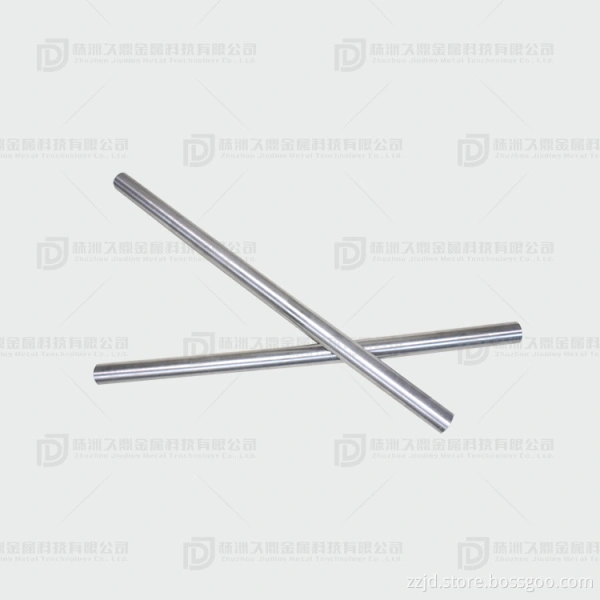
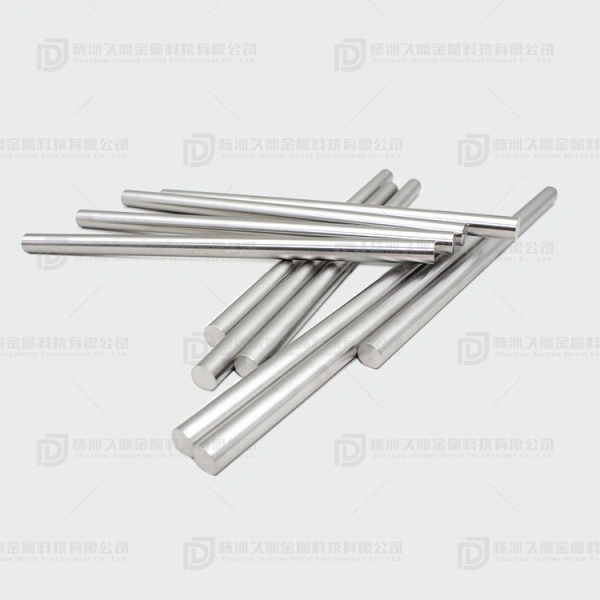
Tungsten alloy rods are precision-engineered cylindrical components manufactured from tungsten combined with nickel, iron, or copper to achieve densities exceeding that of lead. Unlike pure tungsten, these alloys offer enhanced ductility and machinability while retaining exceptional density and thermal stability.
For procurement managers sourcing materials for counterweights, radiation shielding, or aerospace ballast, tungsten alloy rods provide a critical advantage: significantly reduced volume compared to traditional metals without sacrificing mass. This translates directly into lighter, more compact designs for your end products.
Zhuzhou Jiuding Metal Technology Co., Ltd., established in 2001, specializes in manufacturing these high-performance rods using advanced pressing and Metal Injection Molding (MIM) technologies. Our rigorous quality control ensures every rod meets strict tolerances for international markets including the USA, Canada, and Japan.
Our state-of-the-art production facilities combine decades of expertise with international certifications to deliver consistent, high-quality tungsten alloy rods. We adhere to ISO 9001, ISO 14001, ISO 45001, and ISO 13485 standards, ensuring reliability for medical, industrial, and defense applications.
Enables complex geometries and tight tolerances for custom tungsten alloy rods, reducing secondary machining costs.
Ensures uniform density distribution throughout the rod, critical for balancing and radiation shielding performance.
Every batch undergoes strict inspection for density, hardness, and dimensional accuracy. Our R&D team, led by materials science professors, continuously optimizes processes to maintain leading-edge quality levels.
Selecting a reliable supplier for tungsten heavy alloy rods requires evaluating more than just price. Buyers must consider manufacturing capability, certification compliance, and technical support to mitigate supply chain risks.
Ensure the supplier possesses both pressing and MIM technologies. This dual capability allows them to handle both standard and non-standard custom shapes, offering greater flexibility for your projects.
Look for ISO 9001, ISO 14001, ISO 45001, and specifically ISO 13485 if you require medical-grade components. These certifications validate their commitment to quality management systems.
A supplier with strong academic partnerships, like Zhuzhou Jiuding's cooperation with Central South University, can provide valuable engineering insights and custom formulation solutions tailored to your specific application needs.
Use this checklist to evaluate potential suppliers and ensure your tungsten alloy rod orders meet all technical and compliance requirements before committing to large-scale purchases.
Confirm the supplier provides certified density reports matching your required specifications (typically 16.5-18.0 g/cm³).
Specify acceptable tolerances for diameter and length. Ask about their machining capabilities for custom sizes.
Define whether as-sintered, turned, polished, or ground finishes are needed for your assembly process.
Verify ISO 9001, ISO 14001, ISO 45001, and ISO 13485 certifications are current and applicable to your industry sector.
Clarify minimum order quantities and standard lead times to align with your production schedule and inventory strategy.
When sourcing tungsten heavy alloy rods, prioritize manufacturers with proven track records in international markets, comprehensive certifications, and advanced production technologies. Below are key criteria for selecting a reliable partner:
Choose companies with over two decades of experience, such as Zhuzhou Jiuding Metal Technology Co., Ltd. (est. 2001), which demonstrates stability and continuous improvement in tungsten alloy manufacturing.
Ensure the supplier holds ISO 9001, ISO 14001, ISO 45001, and ISO 13485 certifications. These credentials verify adherence to global quality, environmental, safety, and medical device standards.
Look for suppliers utilizing both Metal Injection Molding (MIM) and pressing technologies. This combination enables them to produce both standard and complex custom shapes with high precision.
Prefer suppliers with established export channels to regions like North America, Canada, and Japan. This indicates compliance with stringent international regulations and quality expectations.
Suppliers partnering with renowned universities (e.g., Central South University) offer access to cutting-edge material science innovations and customized alloy formulations for specialized applications.
Select partners who emphasize sincere service, competitive pricing, and proactive communication. A customer-oriented approach reduces procurement friction and ensures long-term supply chain reliability.
Tungsten alloy rods serve diverse industries due to their unique combination of high density, radiation absorption, thermal stability, and corrosion resistance. Their versatility makes them indispensable in high-performance applications across multiple sectors.
Radiation Shielding: Used in X-ray collimators, gamma knife components, and syringe shields. ISO 13485 certification ensures biocompatibility and regulatory compliance for medical devices.
Counterweights & Ballast: Provides precise balance in aircraft control surfaces, helicopter rotors, and missile guidance systems. High density allows for compact, lightweight designs without sacrificing performance.
Instrument Weight Bars: Deployed in downhole drilling equipment where high temperature and pressure resistance are critical. Corrosion-resistant properties ensure longevity in harsh well environments.
Premium Equipment: Utilized in fishing sinkers, dart barrels, and golf club heads. The dense material enhances performance through improved balance and momentum transfer.
Machining Components: Employed in boring bars, swaging rods, and bucking bars. High hardness and wear resistance extend tool life and improve precision in metalworking operations.
Copper-Tungsten Electrodes: Combines tungsten's thermal stability with copper's conductivity for resistance welding electrodes and semiconductor heat sinks. Excellent for high-cycle industrial applications.
Procurement buyers often encounter challenges when sourcing tungsten heavy alloy rods. Understanding these common pitfalls helps mitigate risks and ensures smoother transactions with international suppliers.
Low-quality suppliers may produce rods with uneven density distribution, compromising performance in counterweight and shielding applications. Always request third-party test reports verifying density consistency across batches.
Tight tolerances are critical for precision components. Poor machining capabilities can result in out-of-spec diameters or lengths, causing assembly failures. Verify the supplier's CNC machining capacity and quality control procedures before ordering.
Medical and aerospace buyers require ISO 13485 and AS9100 certifications. Many general tungsten producers lack these specialized credentials, leading to compliance issues during audits. Confirm certification validity and scope upfront.
Custom tungsten alloy rods often involve lengthy production cycles. Unreliable suppliers may miss delivery deadlines, disrupting your production schedule. Establish clear timelines, milestone updates, and penalty clauses in contracts.
Improper sintering or pressing can cause internal porosity or surface cracks, weakening the rod's structural integrity. Request visual inspection reports and sample testing to identify defects before committing to bulk orders.
Language and cultural differences can lead to specification misunderstandings. Work with suppliers who have English-speaking technical teams and established communication protocols to ensure accurate requirement fulfillment.
Get answers to common questions about tungsten heavy alloy rods, from material specifications to customization options and shipping considerations.
Standard tungsten heavy alloy rods typically have densities ranging from 16.5 to 18.0 g/cm³, depending on the nickel-iron-copper composition. Higher tungsten content yields greater density, making them ideal for compact counterweight and radiation shielding applications.
Yes. Using Metal Injection Molding (MIM) and precision pressing technologies, we can produce non-standard shapes, complex geometries, and custom dimensions. Our R&D team supports engineering consultations to optimize designs for your specific requirements.
We are certified to ISO 9001 (Quality Management), ISO 14001 (Environmental Management), ISO 45001 (Occupational Health & Safety), and ISO 13485 (Medical Devices). These certifications ensure our products meet international standards for quality, safety, and regulatory compliance.
Tungsten alloys offer exceptional density (up to 1.7x that of lead), high melting point, excellent radiation absorption, and superior corrosion resistance. Compared to steel or brass, they provide significantly higher mass in smaller volumes, enabling lighter, more efficient product designs.
Products are carefully packaged in protective foam, wooden crates, or customized containers to prevent damage during transit. We ensure secure packing for international shipments to the USA, Canada, Japan, and other global destinations.
Standard tungsten alloy rods typically ship within 7-14 days. Custom orders requiring special dimensions, shapes, or treatments may take 15-30 days depending on complexity. We provide accurate lead time estimates during the quotation phase to help you plan production schedules effectively.
About Us
Related Products List
Contact Us

Privacy statement: Your privacy is very important to Us. Our company promises not to disclose your personal information to any external company with out your explicit permission.
Fill in more information so that we can get in touch with you faster
Privacy statement: Your privacy is very important to Us. Our company promises not to disclose your personal information to any external company with out your explicit permission.