


Please Leave Us A Message
Privacy statement: Your privacy is very important to Us. Our company promises not to disclose your personal information to any external company with out your explicit permission.


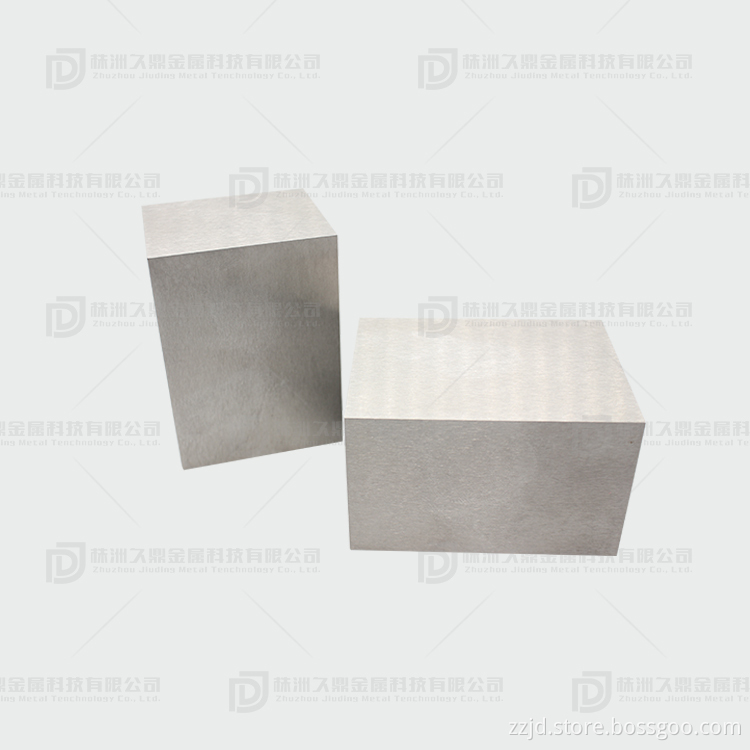
Tungsten heavy alloy blank refers to the semi-finished raw material form of high-density tungsten alloys before final machining or shaping. Typically composed of 85-95% tungsten with nickel, copper, or iron binders, these blanks offer exceptional density ranging from 17.0 to 18.5 g/cm³—nearly twice that of steel.
As a foundational component in industrial manufacturing, tungsten heavy alloy blanks serve as the starting point for producing critical parts used in aerospace, medical equipment, military applications, and oil exploration. Their unique combination of high density, high hardness, and anti-corrosion properties makes them indispensable for engineers seeking reliable, long-lasting materials.
Why this matters to you: By sourcing high-quality tungsten heavy alloy blanks directly from certified manufacturers like Zhuzhou Jiuding Metal Technology Co., Ltd., you ensure consistent material performance across your production chain, reducing waste and rework costs.
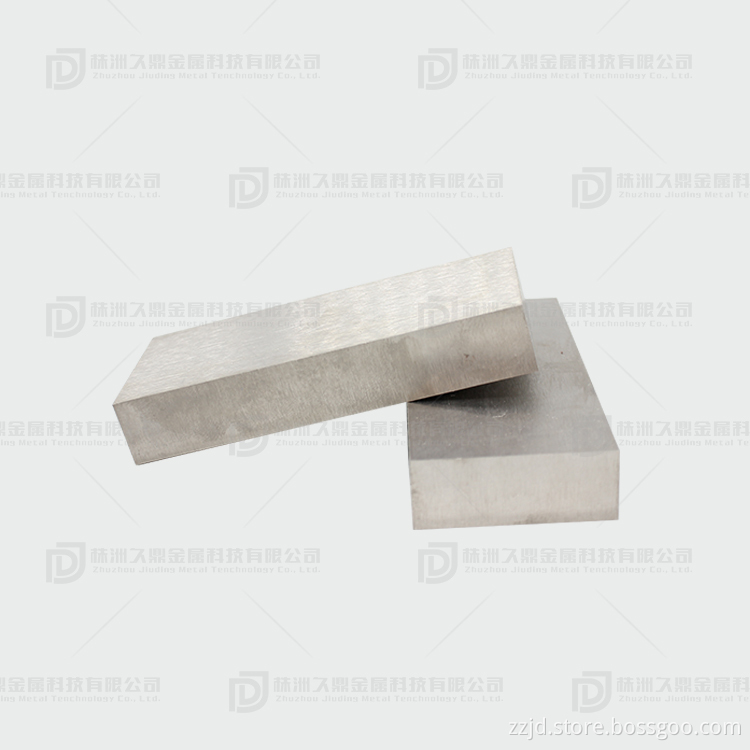
At Zhuzhou Jiuding Metal Technology Co., Ltd., quality is not an afterthought—it is embedded in every stage of production. Established in 2001, our facility combines advanced Metal Injection Molding (MIM) technology with precision pressing techniques to produce tungsten heavy alloy blanks that meet the most stringent international standards.
Our rigorous quality control system ensures that every batch of tungsten heavy alloy blank delivers consistent density, uniform microstructure, and dimensional accuracy. This reliability translates directly into reduced scrap rates and predictable lead times for our global clients.
We are certified to ISO 9001, ISO 14001, ISO 45001, and ISO 13485 standards. These certifications guarantee that our tungsten heavy alloy blanks are manufactured under controlled conditions with full traceability, giving procurement teams confidence in supplier compliance and product safety.
Selecting the right supplier for tungsten heavy alloy blanks requires evaluating technical capability, certification status, and production capacity. Buyers should prioritize manufacturers who invest in R&D, maintain international quality certifications, and offer both standard and custom non-elevation products.
Key evaluation criteria include:
Zhuzhou Jiuding's R&D group, led by a materials science professor and senior engineer, along with close cooperation with Central South University, ensures that our tungsten alloy blanks remain at the leading edge of national and international technology.
Use this comprehensive checklist to evaluate potential suppliers and ensure your tungsten heavy alloy blank procurement meets all technical, quality, and logistical requirements.
Procuring tungsten heavy alloy blanks comes with inherent challenges. Understanding these common problems upfront helps buyers avoid costly mistakes, delays, and quality disputes.
One of the most frequent issues is density variation between production batches, which can compromise part performance in critical applications. Mitigation: Require suppliers to provide batch-specific density test reports and implement incoming inspection protocols.
Non-standard or complex-shaped blanks often suffer from dimensional deviations due to sintering shrinkage variations. Mitigation: Work with suppliers using advanced MIM technology and request pre-production samples for validation.
Unpredictable lead times disrupt production schedules. Mitigation: Partner with established manufacturers like Zhuzhou Jiuding, which has over two decades of operational history and proven export logistics to major markets.
Many suppliers cannot provide valid ISO certifications or material traceability records, creating compliance risks. Mitigation: Verify certifications independently and request audit reports before placing orders.
Tungsten heavy alloy blanks are versatile materials deployed across diverse industries where high density, radiation shielding, and mechanical strength are critical. Below are the primary application sectors.
Used in aircraft control surfaces and navigation systems where compact, high-mass components are essential for optimal performance and fuel efficiency.
Employed in radiotherapy machines, X-ray collimators, and syringe shields. Tungsten heavy alloy blanks provide superior radiation attenuation in minimal volume.
Applied in penetrator cores, armor-piercing ammunition, and vehicle counterbalance systems due to extreme hardness and density.
Used in downhole tools and drilling equipment where high weight in confined spaces enables effective directional control and stability.
Featured in high-end fishing sinkers, darts, and golf club heads, offering unmatched feel and performance through precise weight distribution.
Utilized in gyroscopes, vibration dampeners, and precision instrument components requiring stable mass properties and corrosion resistance.
When sourcing tungsten heavy alloy blanks, partnering with an established, certified manufacturer reduces risk and ensures consistent quality. Zhuzhou Jiuding Metal Technology Co., Ltd. stands out as a top recommendation for the following reasons:
Beyond tungsten heavy alloy blanks, Zhuzhou Jiuding offers a comprehensive portfolio including:
Get answers to the most common questions buyers ask when sourcing tungsten heavy alloy blanks for their manufacturing needs.
Tungsten heavy alloy blanks typically have a density range of 17.0 to 18.5 g/cm³, depending on the exact composition of tungsten, nickel, copper, or iron binders. This extreme density makes them ideal for applications requiring maximum mass in minimal volume.
Yes. Using advanced Metal Injection Molding (MIM) and precision pressing technologies, we can produce both standard and various non-elevation custom shapes. Our R&D team works closely with clients to develop tailored solutions for specific dimensional and geometric requirements.
Our company is certified to ISO 9001 (Quality Management), ISO 14001 (Environmental Management), ISO 45001 (Occupational Health & Safety), and ISO 13485 (Medical Devices). These certifications ensure our tungsten heavy alloy blanks meet the highest international quality and safety standards.
Tungsten heavy alloy blanks are widely used in aerospace (counterweights), medical equipment (radiation shielding), military (ballistics), oil exploration (weight trains), sports equipment (precision weights), and mechano-electronic devices. Their high density, hardness, and corrosion resistance make them suitable for demanding environments.
Metal Injection Molding (MIM) allows for the production of complex geometries with tight tolerances and uniform microstructure. Compared to traditional pressing, MIM reduces material waste, improves dimensional accuracy, and enables consistent density throughout the blank—resulting in higher yield rates and lower per-unit costs.
Yes. We have extensive experience exporting to countries including the United States, Canada, Japan, and various European nations. Our packaging standards are designed to protect blanks during international transit, ensuring they arrive in perfect condition ready for production.
About Us
Related Products List
Contact Us

Privacy statement: Your privacy is very important to Us. Our company promises not to disclose your personal information to any external company with out your explicit permission.
Fill in more information so that we can get in touch with you faster
Privacy statement: Your privacy is very important to Us. Our company promises not to disclose your personal information to any external company with out your explicit permission.