


Please Leave Us A Message
Privacy statement: Your privacy is very important to Us. Our company promises not to disclose your personal information to any external company with out your explicit permission.


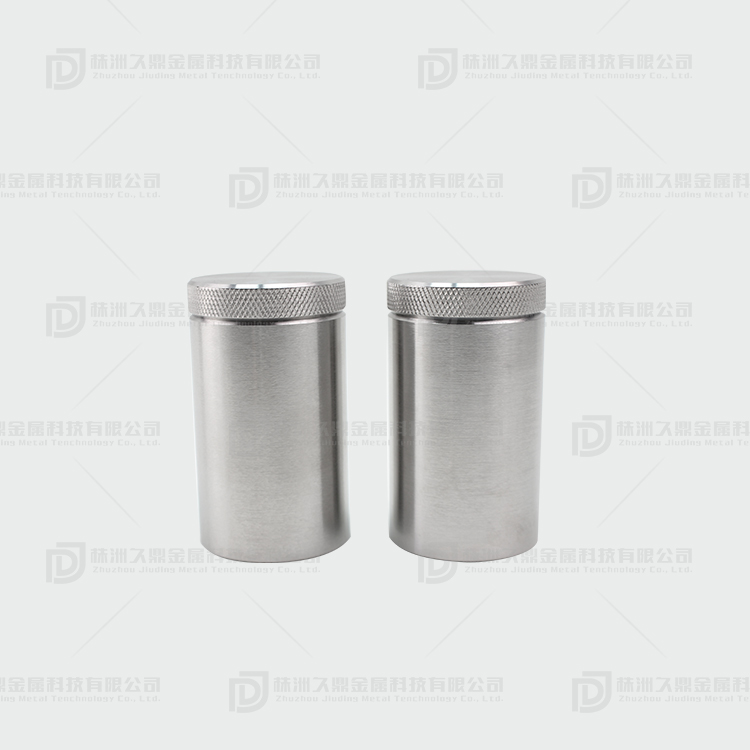
A Tungsten Fluoride-Depleted Uranium (FDG) container is a specialized storage vessel designed for the safe transport and long-term storage of radioactive materials. These containers are critical in medical and industrial applications where high-density shielding is required to protect personnel and the environment from radiation exposure.
Constructed from high-purity tungsten alloys, these containers offer superior density compared to traditional lead alternatives. The high melting point and corrosion resistance of tungsten ensure that the integrity of the container remains intact even under extreme conditions, making it an essential component in modern radiopharmaceutical logistics.
Our manufacturing process leverages advanced Metal Injection Molding (MIM) and pressing technologies to produce containers that meet rigorous international safety standards. By choosing our tungsten FDG containers, you ensure compliance with global regulations while minimizing the logistical burden associated with heavy shielding materials.

Zhuzhou Jiuding Metal Technology Co., Ltd. operates under strict ISO 9001, ISO 14001, ISO 45001, and ISO 13485 certifications. This multi-standard certification ensures that every Tungsten FDG container produced meets the highest levels of quality management, environmental responsibility, occupational health, and medical device safety.
We utilize state-of-the-art Metal Injection Molding (MIM) and precision pressing technologies. These methods allow us to achieve complex geometries and tight tolerances that are critical for radiation shielding effectiveness. Our R&D team, led by materials science professors, continuously innovates to improve the density and durability of our tungsten alloys.
Every batch undergoes comprehensive testing for density, hardness, and structural integrity. We verify that our containers provide consistent shielding performance, reducing the risk of radiation leakage during transport. Our quality-first approach means that you can rely on our containers for secure handling of sensitive radioactive isotopes.
The primary function of an FDG container is radiation shielding. Ensure your supplier uses high-purity tungsten alloys with a density close to that of pure tungsten (19.25 g/cm³). Higher density directly correlates to better shielding efficiency, allowing for thinner, lighter containers without compromising safety.
Different radiopharmaceutical applications require specific internal configurations. A reliable manufacturer should offer OEM/ODM services to customize the internal layout, lid mechanisms, and external dimensions of your Tungsten FDG container. Look for suppliers with proven experience in producing non-standard designs tailored to your specific equipment.
Verify that the manufacturer adheres to international standards such as ISO 13485 for medical devices. Compliance ensures that the container design supports the sterile and safe handling requirements of nuclear medicine facilities. Documentation and traceability are also key indicators of a professional supplier.
Verify tungsten content percentage and overall density specifications.
Ensure attenuation rates meet local regulatory limits for transport.
Check for drop-test certifications and impact resistance data.
Confirm seal integrity to prevent contamination or leakage.
Validate ISO 9001, ISO 13485, and other relevant certifications.
Review export history to North America, Europe, and Asia.
Some suppliers use low-grade tungsten powders mixed with binders, resulting in lower density than advertised. This leads to inadequate radiation protection and potential regulatory violations. Always request third-party density test reports before placing large orders.
Improperly machined lids or threads can compromise the container's seal, risking contamination. Incompatible internal holders may fail to secure vials during transit. Work with manufacturers who offer custom molding services to ensure a perfect fit for your specific syringe or vial types.
Complex manufacturing processes like MIM can have lengthy production cycles if not properly managed. Delays can disrupt your supply chain. Partner with established factories like Zhuzhou Jiuding that have robust production lines and clear communication channels to mitigate scheduling risks.
Missing certificates of analysis or material traceability records can cause customs clearance issues. Ensure your supplier provides complete documentation packages, including material composition certificates and radiation shielding test results, for every shipment.
Established in 2001, we bring over two decades of experience in tungsten alloy manufacturing. Our deep understanding of material science allows us to produce containers that outperform standard alternatives in durability and shielding effectiveness.
With ISO 9001, ISO 14001, ISO 45001, and ISO 13485 certifications, we meet the stringent requirements of international markets. Our products are trusted in America, Canada, Japan, and other regions with rigorous safety standards.
Our R&D group, collaborating with Central South University, ensures that our technology remains at the forefront of the industry. We offer technical support and customization options that help you solve unique procurement challenges.
Our tungsten FDG containers typically achieve a density of 17.5-18.5 g/cm³, which provides excellent radiation shielding comparable to pure tungsten while maintaining structural integrity and manufacturability. This high density ensures effective attenuation of gamma rays emitted by Fluorine-18 (FDG).
Yes, we offer extensive OEM and ODM services. You can specify internal dimensions, external shape, lid mechanisms, and labeling to match your facility's workflow. Our Metal Injection Molding (MIM) technology allows for precise customization without compromising the shielding properties of the container.
Our manufacturing facility is certified to ISO 9001 (Quality Management), ISO 14001 (Environmental Management), ISO 45001 (Occupational Health and Safety), and ISO 13485 (Medical Devices). These certifications ensure that every container meets international standards for quality, safety, and environmental responsibility.
Tungsten is significantly denser than lead, offering superior shielding in a smaller volume. It is also more durable, corrosion-resistant, and environmentally friendly. While lead requires thicker walls for equivalent protection, tungsten containers are lighter and more compact, facilitating easier handling and transport in clinical settings.
Standard lead times vary based on order volume and customization requirements. Typically, bulk orders can be fulfilled within 4-6 weeks. We recommend contacting our sales team early to discuss your timeline, as we maintain strong production capacity to accommodate urgent requests from global partners.
About Us
Related Products List
Contact Us

Privacy statement: Your privacy is very important to Us. Our company promises not to disclose your personal information to any external company with out your explicit permission.
Fill in more information so that we can get in touch with you faster
Privacy statement: Your privacy is very important to Us. Our company promises not to disclose your personal information to any external company with out your explicit permission.