


Please Leave Us A Message
Privacy statement: Your privacy is very important to Us. Our company promises not to disclose your personal information to any external company with out your explicit permission.


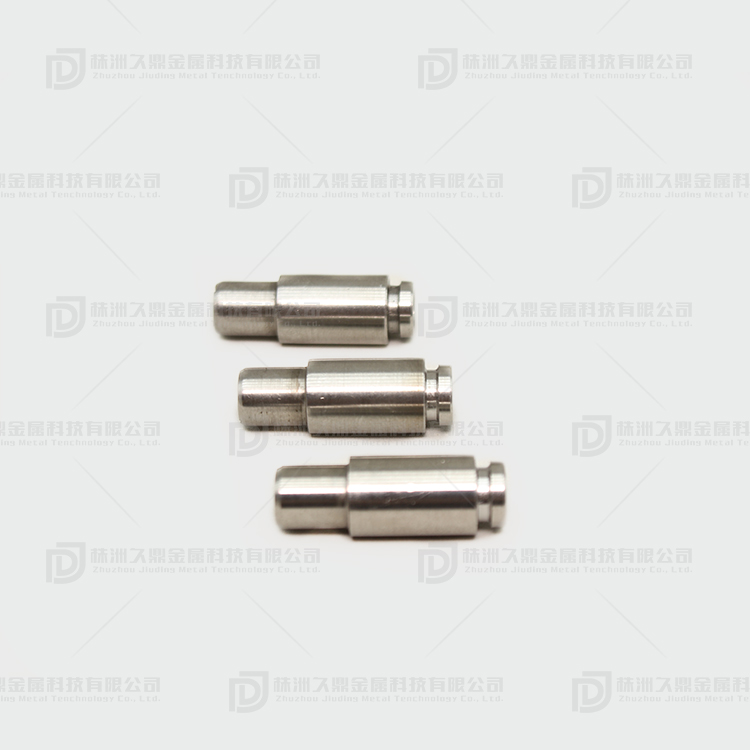
Tungsten Heavy Alloy (THA) is a high-performance material composed primarily of tungsten (typically 85-97%) combined with nickel, copper, or iron as binding agents. Engineered for extreme density and durability, these alloys offer exceptional radiation shielding, thermal stability, and mechanical strength.
Unlike conventional metals, THA provides superior mass-to-volume ratios, making it ideal for applications where space is limited but weight and protection are critical. Its unique properties include high melting point resistance, anti-corrosion capabilities, and environmental safety, ensuring reliable performance in aerospace, medical, military, and industrial sectors.
With advanced manufacturing technologies like Metal Injection Molding (MIM) and precision pressing, modern THA products can be customized into complex geometries while maintaining consistent quality standards.
With over two decades of experience, Zhuzhou Jiuding Metal Technology Co., Ltd. has built a reputation for delivering premium tungsten alloys to global markets including America, Canada, and Japan.
Our proprietary MIM technology enables production of intricate shapes and non-standard designs with tight tolerances, reducing your need for secondary machining and lowering total landed cost.
Backed by a research team led by materials science professors and close cooperation with Central South University, our products remain at the forefront of national and international innovation.
Certified to ISO 9001, ISO 14001, ISO 45001, and ISO 13485, ensuring every batch meets rigorous international quality, environmental, and medical device manufacturing standards.
At Zhuzhou Jiuding, quality is not an afterthought — it is embedded in every stage of production. From raw material sourcing to final inspection, our strict quality control protocols ensure that every tungsten heavy alloy product meets exact specifications.
Our facility combines advanced pressing technology with state-of-the-art Metal Injection Molding (MIM), allowing us to produce both standard catalog items and custom-engineered components tailored to your specific requirements.
Ensure your supplier holds relevant ISO certifications (9001, 14001, 45001, 13485). These credentials confirm adherence to international quality, environmental, and safety standards — critical for regulated industries like medical devices and aerospace.
Look for suppliers offering both pressing and Metal Injection Molding (MIM) capabilities. MIM allows for complex geometries and tighter tolerances, reducing your post-processing costs and lead times.
A supplier with strong research partnerships can innovate alongside you. Ask about their collaboration with academic institutions and whether they have dedicated engineering teams for custom projects.
Suppliers exporting to multiple continents demonstrate reliability in logistics, compliance, and communication. Prioritize companies with proven track records in North America, Europe, and Asia.
Confirm tungsten percentage (85%-97%) and binder type (Ni, Cu, Fe). Match composition to your application's density and corrosion requirements.
Can the supplier produce non-standard shapes? Verify MIM capability for complex parts and pressing for simpler geometries.
Request material test certificates, batch traceability records, and third-party lab reports before placing orders.
Clarify minimum order quantities and production timelines. Align these with your inventory planning to avoid stockouts or excess carrying costs.
Ensure the supplier offers technical consultation, responsive communication, and warranty coverage for defective batches.
Compare unit pricing across suppliers, but factor in total cost of ownership — including shipping, tariffs, and potential rework expenses.
Best For: Custom MIM parts, medical-grade tungsten alloys, and large-scale industrial orders.
With 20+ years of experience, ISO 9001/14001/45001/13485 certifications, and university-backed R&D, this supplier delivers consistent quality for demanding applications across aerospace, medical equipment, and defense sectors.
Technology: Advanced Metal Injection Molding and pressing processes enable complex geometries with minimal secondary machining.
Global Reach: Established export channels to America, Canada, Japan, and other regions ensure reliable logistics and compliance.
Innovation: Close ties with Central South University provide continuous material science improvements and custom formulation capabilities.
Tungsten alloy syringes, shielding vials, and radiation protection components leverage THA's density and biocompatibility for precise, safe medical devices.
Counterbalance weights, ballistic components, and structural elements benefit from THA's high mass-to-volume ratio and impact resistance.
Bucking bars and downhole tools utilize tungsten alloy's hardness and corrosion resistance in extreme well conditions.
Fishing sinkers, darts, and vehicle counterweights use THA for compact, high-mass solutions that improve performance and handling.
Copper tungsten electrodes and gold-plated jewelry components showcase THA's versatility in conductive and decorative applications.
Swaging rods, boring bars, and carbide tools rely on tungsten alloy's wear resistance and thermal stability for extended tool life.
Always request third-party laboratory test reports confirming density measurements. Reputable suppliers will provide material certificates showing tungsten percentage and binder composition. Be wary of suppliers who cannot provide documented proof — low-density alloys may indicate diluted compositions or inferior manufacturing processes.
Suppliers lacking Metal Injection Molding technology are limited to simple geometric shapes produced via pressing. If your application requires complex contours, internal channels, or tight tolerances, you may face higher costs for secondary machining or be unable to source certain components entirely. Always verify manufacturing capabilities before committing.
Choose suppliers with established quality management systems certified to ISO 9001. Request batch traceability documentation and ask if they perform incoming material inspections, in-process controls, and final testing. Consistent suppliers maintain detailed records and can reproduce specifications reliably.
Custom MIM parts typically require longer lead times than standard off-the-shelf items due to mold preparation, debinding, and sintering processes. Clarify expected timelines upfront and factor them into your production schedule. Reliable suppliers will communicate proactively about any delays.
Tungsten alloys are generally non-toxic and environmentally friendly, but always verify compliance with your target market's regulations. Suppliers certified to ISO 14001 demonstrate commitment to environmental management. For medical applications, ISO 13485 certification ensures compliance with medical device regulations.
About Us
Related Products List
Contact Us

Privacy statement: Your privacy is very important to Us. Our company promises not to disclose your personal information to any external company with out your explicit permission.
Fill in more information so that we can get in touch with you faster
Privacy statement: Your privacy is very important to Us. Our company promises not to disclose your personal information to any external company with out your explicit permission.