


Please Leave Us A Message
Privacy statement: Your privacy is very important to Us. Our company promises not to disclose your personal information to any external company with out your explicit permission.


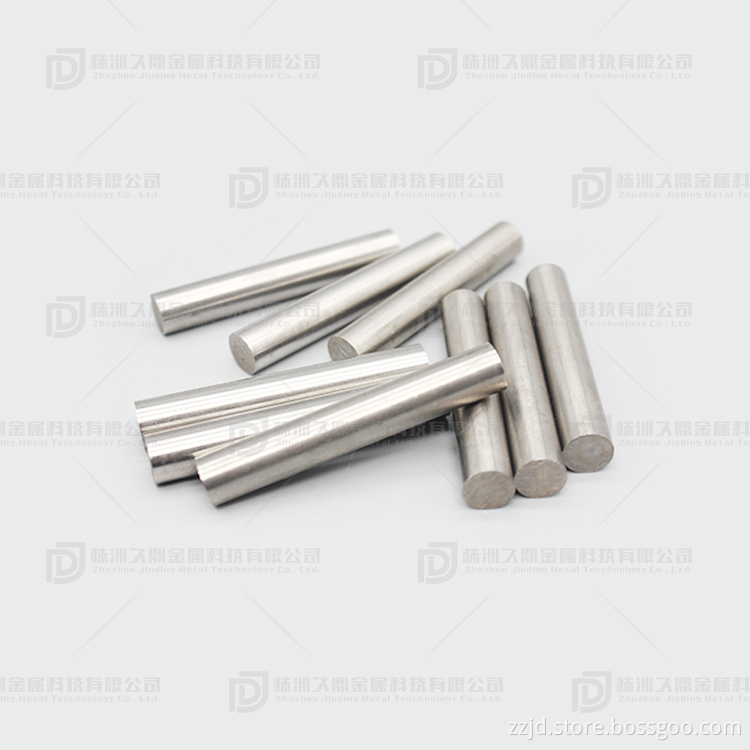
Tungsten heavy alloy rod is a high-performance material engineered for applications demanding exceptional density and radiation shielding. Primarily composed of tungsten with nickel, copper, or iron binders, these rods offer densities ranging from 16.5 to 18.0 g/cm³—nearly twice that of steel.
Unlike standard structural metals, tungsten heavy alloy rods are designed for specialized roles where space is limited but mass and protection are critical. Their unique combination of high melting point, thermal conductivity, and non-magnetic properties makes them the preferred choice for aerospace, medical equipment, and military industries.
At Zhuzhou Jiuding Metal Technology Co., Ltd., we manufacture these rods using advanced pressing and Metal Injection Molding (MIM) technologies, ensuring consistent batch quality and precise dimensional tolerances for your procurement needs.
Our manufacturing facility operates under strict ISO 9001, ISO 14001, ISO 45001, and ISO 13485 certifications, ensuring every tungsten heavy alloy rod meets international safety and quality benchmarks.
We utilize both traditional pressing technology and state-of-the-art Metal Injection Molding (MIM). This dual-capability allows us to produce both standard cylindrical rods and complex custom geometries with tight tolerances, reducing your need for secondary machining.
Backed by a research group led by materials science professors from Central South University, our alloys are formulated for optimal performance. This academic partnership ensures our tungsten heavy alloy rods maintain leading-level mechanical properties, including high hardness and anti-corrosion resistance.
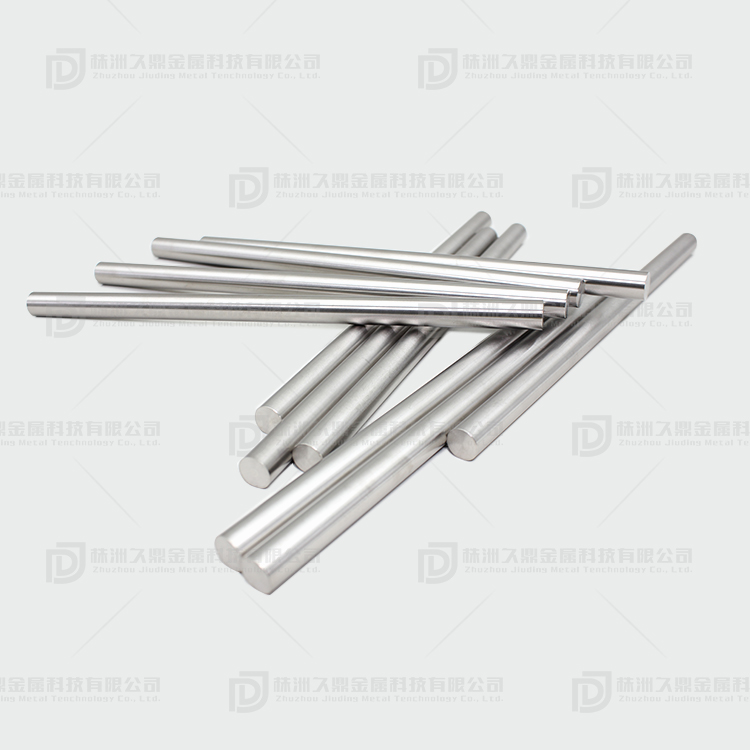
Selecting the correct tungsten heavy alloy rod requires balancing density, mechanical strength, and cost. Buyers must consider the specific application environment to avoid over-specifying or under-performing.
Determine if you need standard density (16.5-17.0 g/cm³) for counterweights or ultra-high density (17.5-18.0 g/cm³) for radiation shielding. Higher density often correlates with higher tungsten content and cost.
Nickel-copper binders offer superior corrosion resistance and machinability, ideal for medical and marine environments. Nickel-iron binders provide higher magnetic permeability, suitable for electronic shielding. Choose based on your end-use constraints.
Standard rods are round, but MIM technology allows for square, hexagonal, or custom profiles. Specify your tolerance requirements early to leverage our precision machining capabilities and reduce waste.
Ensure the supplier holds valid ISO 9001, ISO 13485 (for medical), and ISO 14001 certifications. Verify test reports for density and composition.
Confirm the factory can handle your order volume without compromising quality. Ask about lead times for standard vs. custom orders.
Request detailed chemical analysis reports. Ensure the tungsten content matches your specification sheet to guarantee density and shielding effectiveness.
Check for surface defects like cracks or porosity. A smooth, uniform surface indicates high-quality pressing and sintering processes.
Verify if the supplier offers MIM or CNC machining for custom shapes. This reduces your assembly costs and improves part integration.
Prefer suppliers with a track record of exporting to regions like North America, Canada, and Japan, indicating compliance with international standards.
Problem: Variations in density can compromise radiation shielding or balance accuracy. Solution: Work with manufacturers who use controlled pressing pressures and sintering temperatures. Request density certification for every batch.
Problem: Tungsten alloys are hard and can crack if machined incorrectly. Solution: Specify alloys with appropriate binder ratios (e.g., Ni-Cu for better machinability) and ensure your supplier uses diamond-coated tooling.
Problem: Custom shapes require MIM or extensive CNC work, delaying delivery. Solution: Plan ahead and share 3D models early. Suppliers with integrated R&D and production lines, like Zhuzhou Jiuding, can streamline this process.
Problem: Some tungsten alloys may corrode in acidic or marine settings. Solution: Choose Ni-Cu binders for superior corrosion resistance and consider surface coating if the environment is extreme.
Used in X-ray collimators, gamma knife components, and radiotherapy shielding. Non-toxic and environmentally friendly properties ensure patient safety.
Ideal for aircraft counterweights, missile guidance systems, and armor-piercing ammunition. High density provides maximum mass in minimal volume.
Essential for downhole tools and logging instruments. Withstands high pressure and temperature while providing necessary weight for drilling operations.
Used in high-performance fishing sinkers, dart barrels, and golf club heads. Offers superior feel and performance due to high density and vibration damping.
Functions as heat sinks and electromagnetic interference (EMI) shielding components. High thermal conductivity helps dissipate heat efficiently.
Used in gold-plated jewelry and watches. The heavy weight adds a premium feel, while the non-allergenic nature ensures wearer comfort.
As a professional joint venture established in 2001, Zhuzhou Jiuding Metal Technology Co., Ltd. combines decades of experience with cutting-edge technology. We are not just a supplier; we are a partner in your product development.
Our R&D team, led by university professors, ensures our tungsten heavy alloy rods are at the forefront of material science. We offer technical support from design to delivery.
Our products are trusted in America, Canada, Japan, and beyond. We understand international quality standards and shipping requirements, simplifying your global procurement workflow.
"Quality first, customer-orientation" is our core principle. We strive to exceed expectations through sincere service, competitive pricing, and reliable delivery.
The density typically ranges from 16.5 to 18.0 g/cm³, depending on the tungsten content and binder ratio. Higher density grades are available for specialized radiation shielding applications.
Yes, we offer both standard and non-standard products. Using Metal Injection Molding (MIM) and CNC machining, we can produce complex geometries, custom lengths, and specific diameters to meet your exact requirements.
Yes, our tungsten alloys are non-toxic and environmentally friendly. They comply with ISO 13485 standards for medical devices, making them safe for use in X-ray collimators, gamma knives, and other medical equipment.
MOQ varies depending on the product type and customization level. For standard rods, MOQ is flexible. For custom MIM parts, we discuss MOQ on a case-by-case basis to accommodate your project needs.
Tungsten heavy alloy is approximately 1.7 to 1.9 times denser than steel. This means you can achieve the same weight with significantly smaller dimensions, saving space and improving efficiency in compact designs.
About Us
Related Products List
Contact Us

Privacy statement: Your privacy is very important to Us. Our company promises not to disclose your personal information to any external company with out your explicit permission.
Fill in more information so that we can get in touch with you faster
Privacy statement: Your privacy is very important to Us. Our company promises not to disclose your personal information to any external company with out your explicit permission.