


Please Leave Us A Message
Privacy statement: Your privacy is very important to Us. Our company promises not to disclose your personal information to any external company with out your explicit permission.


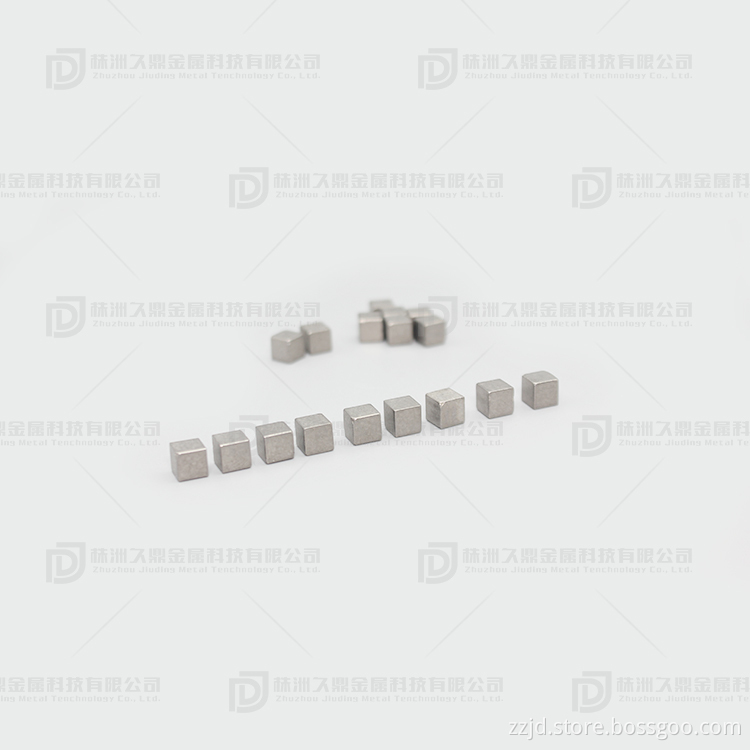
Tungsten heavy alloy tips are precision-engineered components manufactured from a composite of tungsten and other metals like nickel, copper, or iron. These tips are designed to offer exceptional density and hardness, making them ideal for applications requiring high mass in a compact volume. Due to their unique properties, including high melting point and radiation protection capabilities, tungsten heavy alloy tips are critical in industries ranging from aerospace to medical equipment.
The manufacturing process involves advanced techniques such as Metal Injection Molding (MIM) and pressing technology, ensuring consistent quality and dimensional accuracy. This allows for the production of both standard and custom-shaped tips tailored to specific client requirements. By leveraging these advanced manufacturing methods, suppliers can deliver reliable products that meet stringent industry standards.
Key benefits include reduced material usage due to higher density, enhanced durability under extreme conditions, and environmental friendliness compared to traditional materials like lead. These characteristics make tungsten heavy alloy tips a preferred choice for engineers and procurement specialists seeking high-performance solutions.

Maintaining rigorous quality standards is essential for producing reliable tungsten heavy alloy tips. Our manufacturing facility adheres to international certifications including ISO 9001, ISO 14001, ISO 45001, and ISO 13485, ensuring consistent product quality and safe working conditions. These certifications guarantee that every batch of tungsten heavy alloy tips meets strict specifications for density, hardness, and dimensional tolerance.
Our production process integrates advanced Metal Injection Molding (MIM) technology with traditional pressing methods, allowing us to achieve complex geometries while maintaining structural integrity. Each production stage undergoes multiple quality checks, from raw material inspection to final product testing, ensuring that only compliant items reach our customers. This systematic approach minimizes defects and reduces your risk of supply chain disruptions.
With strong technical support from leading universities and a dedicated R&D team, we continuously improve our manufacturing processes to stay ahead in the tungsten alloy industry. Our commitment to quality ensures that your tungsten heavy alloy tips perform reliably in demanding applications, from medical devices to aerospace components.
Selecting the appropriate tungsten heavy alloy tips requires careful consideration of several factors, including density requirements, mechanical properties, and application-specific needs. Understanding these parameters helps ensure optimal performance and cost-effectiveness in your final product.
Tungsten heavy alloy tips typically contain 85-95% tungsten, with the remainder consisting of nickel, copper, or iron. Higher tungsten content results in greater density, which is crucial for applications requiring maximum mass in minimal space. For radiation shielding applications, selecting tips with optimized composition ensures effective protection while maintaining workability.
The choice between Metal Injection Molding (MIM) and pressing technology depends on the complexity of the tip design and production volume. MIM is ideal for intricate shapes and high-volume production, while pressing technology suits simpler geometries and lower volumes. Discuss your specific requirements with your supplier to determine the most suitable manufacturing method.
Ensure your supplier holds relevant certifications such as ISO 9001 for quality management and ISO 13485 for medical device applications. These certifications indicate a commitment to standardized processes and continuous improvement, reducing your risk of receiving non-compliant products.
Use this comprehensive checklist to evaluate potential suppliers and ensure you select the best partner for your tungsten heavy alloy tips procurement.
Procuring tungsten heavy alloy tips comes with challenges. Here are common issues buyers face and how to address them effectively.
Variations in tungsten density can compromise the performance of tips in critical applications. This issue often stems from inconsistent powder mixing or sintering processes. To mitigate this risk, choose suppliers with strict quality control protocols and certified manufacturing processes. Request batch-specific test reports to verify density consistency before placing large orders.
Tungsten heavy alloy tips must meet precise dimensional specifications to fit correctly in assemblies. Manufacturing deviations can result from tooling wear or improper molding parameters. Work with suppliers who use advanced MIM technology and conduct regular tooling maintenance. Specify acceptable tolerances in your purchase agreement and require pre-shipment inspections.
Raw material shortages or production delays can disrupt your supply chain. Tungsten price volatility and geopolitical factors contribute to these risks. Diversify your supplier base and maintain safety stock levels. Partner with established manufacturers who have strong funding and proven reliability, like companies with over two decades of industry experience.
Missing or invalid certifications can delay product approvals, especially in regulated industries like medical devices. Verify that your supplier holds current ISO 9001, ISO 13485, and other relevant certifications. Request audit reports and confirm certification status directly with issuing bodies before finalizing contracts.
When sourcing tungsten heavy alloy tips, partnering with an experienced manufacturer ensures quality, reliability, and competitive pricing. Below are key attributes to look for in a supplier.
A professional joint venture company specializing in tungsten heavy alloys, tungsten copper, and cemented carbide products. With over 20 years of experience, they offer comprehensive solutions from manufacturing to sales.
Key Advantage: Strong R&D team led by materials science professors with close cooperation with Central South University, ensuring cutting-edge technology and product innovation.
Prioritize suppliers who demonstrate technical expertise, quality commitment, and global market presence to ensure reliable supply of high-performance tungsten heavy alloy tips.
Get answers to common questions about tungsten heavy alloy tips, their applications, and procurement considerations.
Tungsten heavy alloy tips are widely used in aerospace, medical equipment, military applications, mechano-electronics, oil exploration, vehicle counterweights, sports equipment, and radiation shielding. Their high density and hardness make them ideal for applications requiring precise mass distribution and durability under extreme conditions.
Metal Injection Molding (MIM) enables the production of complex geometries with high precision and excellent surface finish. It allows for high-volume manufacturing while maintaining consistent material properties. MIM is particularly advantageous for creating intricate tip designs that would be difficult or costly to produce using traditional pressing methods.
Yes, tungsten heavy alloy tips are non-toxic and environmentally friendly, making them a safer alternative to lead-based materials. They comply with international environmental standards and can be recycled, reducing waste and supporting sustainable manufacturing practices.
Yes, experienced manufacturers can produce various non-standard and custom-sized tungsten heavy alloy tips according to specific client requirements. Discuss your dimensional specifications, density requirements, and application details with your supplier to ensure optimal customization.
Verify that your supplier holds ISO 9001 (quality management), ISO 14001 (environmental management), ISO 45001 (occupational health and safety), and ISO 13485 (medical devices). These certifications demonstrate a commitment to standardized processes, quality assurance, and regulatory compliance.
About Us
Related Products List
Contact Us

Privacy statement: Your privacy is very important to Us. Our company promises not to disclose your personal information to any external company with out your explicit permission.
Fill in more information so that we can get in touch with you faster
Privacy statement: Your privacy is very important to Us. Our company promises not to disclose your personal information to any external company with out your explicit permission.