


Please Leave Us A Message
Privacy statement: Your privacy is very important to Us. Our company promises not to disclose your personal information to any external company with out your explicit permission.


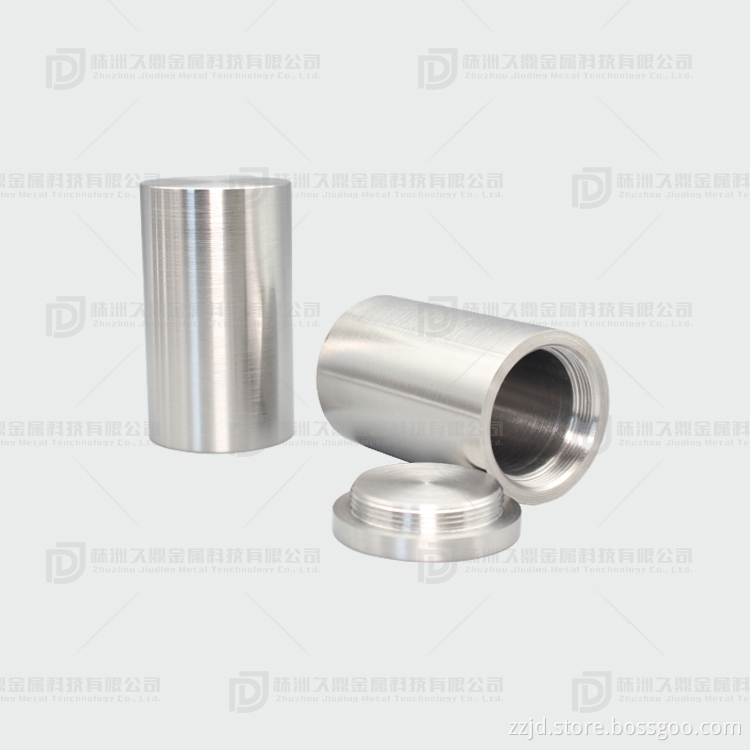
A tungsten shield is a specialized radiation protection component manufactured from high-density tungsten alloys. These shields are engineered to absorb and block harmful ionizing radiation, including X-rays and gamma rays, ensuring safety in medical, industrial, and scientific environments.
Due to tungsten's exceptionally high density (typically around 17-19 g/cm³) and high atomic number, these shields provide superior attenuation capabilities compared to traditional lead shielding. They offer a compact, durable, and environmentally friendly solution for radiation containment without the toxicity concerns associated with lead.
Why it matters: Tungsten alloy shielding reduces your facility's footprint while maximizing safety compliance, allowing for safer operations in confined spaces like mobile imaging units or advanced laboratory setups.
With densities reaching up to 19.25 g/cm³, our tungsten heavy alloys provide significantly better radiation blocking per unit thickness than lead or concrete. This allows for thinner, lighter shields that don't compromise on safety.
Unlike brittle lead, tungsten-copper and tungsten-nickel iron composites offer high mechanical strength and impact resistance. Your shields will withstand daily handling and harsh industrial environments without deforming.
Our tungsten alloy shielding vials and components are non-toxic and eco-friendly. Eliminate the strict hazardous material handling protocols required for lead, simplifying disposal and reducing regulatory overhead.
Utilizing advanced Metal Injection Molding (MIM) and pressing technology, we produce complex geometries with tight tolerances. Ensure perfect fitment in sensitive medical devices and aerospace applications.
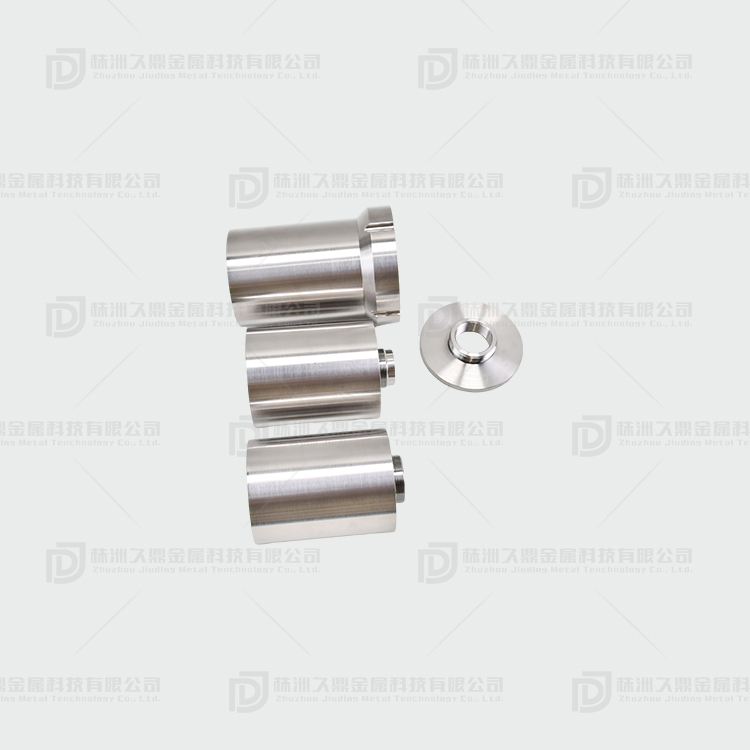
Zhuzhou Jiuding Metal Technology Co., Ltd. ensures every tungsten shield meets rigorous international standards. Our production process integrates advanced materials science with strict quality control protocols.
Certified to ISO 9001, ISO 14001, ISO 45001, and ISO 13485 standards. This comprehensive certification suite guarantees consistent quality, environmental responsibility, and medical-grade reliability for all shielding products.
Our Metal Injection Molding (MIM) capabilities allow for the mass production of complex, high-precision tungsten components. This technology reduces waste and ensures uniform density throughout the shield structure.
Supported by a research group led by materials science professors and senior engineers, our shielding solutions benefit from cutting-edge alloy formulations and continuous improvement based on academic collaboration.
Selecting the appropriate tungsten shielding requires balancing radiation type, energy levels, spatial constraints, and budget. Here is a guide to making the right choice:
Identify whether you need protection against X-rays, gamma rays, or neutrons. Higher energy radiation requires greater density or thickness. Tungsten-copper alloys are ideal for high-energy scenarios due to their thermal conductivity.
If space is limited, opt for high-density tungsten alloys over lower-density alternatives. Complex shapes can be achieved through MIM, eliminating the need for multiple assembled parts.
Ensure your supplier provides full documentation and certifications. Medical and aerospace sectors often require specific traceability and material test reports.
Before finalizing your procurement decision, verify these critical factors to ensure you receive a reliable, cost-effective solution.
Tungsten alloy shielding is versatile and critical across multiple high-tech industries. Here are the primary application areas where our shielding solutions deliver maximum value.
Used in X-ray machines, CT scanners, and radiotherapy devices. Tungsten shields protect operators and patients from unnecessary radiation exposure while maintaining image clarity.
Essential for storage casks, transport containers, and reactor components. High-density shielding minimizes the size of nuclear waste containers, lowering transportation and storage costs.
Provides radiation protection for aircraft electronics and military equipment. The high melting point and anti-corrosion properties make it ideal for harsh operational environments.
Critical for particle accelerators, synchrotrons, and laboratory experiments. Precise shielding ensures accurate data collection by minimizing background radiation interference.
Used in downhole tools and well-logging equipment. Tungsten's durability withstands high pressure and temperature conditions deep underground.
Protects workers during radiographic testing of welds and castings. Compact shielding allows for portable inspection units in field settings.
When selecting a partner for tungsten shielding procurement, prioritize suppliers with proven expertise in materials science and certified manufacturing processes.
Why they stand out: With over two decades of experience since 2001, Zhuzhou Jiuding offers a comprehensive range of tungsten alloys, including specialized shielding vials and components. Their integration of MIM technology allows for complex, high-precision designs that competitors using traditional methods cannot match.
Their strong R&D backing from Central South University and multiple ISO certifications (including ISO 13485 for medical devices) ensure that you receive products that meet the highest global standards. Clients in America, Canada, and Japan trust their consistent quality and competitive pricing.
Tungsten alloys offer higher density (up to 19.25 g/cm³ vs. 11.34 g/cm³ for lead), resulting in better radiation attenuation in a smaller volume. They are also more mechanically robust, less toxic, and have a higher melting point, making them suitable for high-temperature and high-stress environments where lead would fail.
Yes. Using Metal Injection Molding (MIM) and precision machining, manufacturers can create complex, custom-shaped tungsten shields tailored to specific medical equipment requirements, such as collimators, apertures, and protective housings for X-ray and CT systems.
Tungsten-copper alloys are particularly effective at managing heat due to copper's high thermal conductivity combined with tungsten's radiation absorption. This makes them ideal for high-flux applications like linear accelerator windows and diagnostic imaging components.
Unlike lead, tungsten is non-toxic and environmentally friendly. Disposal regulations for tungsten shielding are generally less stringent, reducing long-term liability and disposal costs for facilities using these materials.
Lead times vary based on complexity and quantity. Standard items may ship within weeks, while custom MIM parts typically require 4-8 weeks for tooling and production. Contact your supplier for specific timelines based on your project requirements.
About Us
Related Products List
Contact Us

Privacy statement: Your privacy is very important to Us. Our company promises not to disclose your personal information to any external company with out your explicit permission.
Fill in more information so that we can get in touch with you faster
Privacy statement: Your privacy is very important to Us. Our company promises not to disclose your personal information to any external company with out your explicit permission.