


Please Leave Us A Message
Privacy statement: Your privacy is very important to Us. Our company promises not to disclose your personal information to any external company with out your explicit permission.


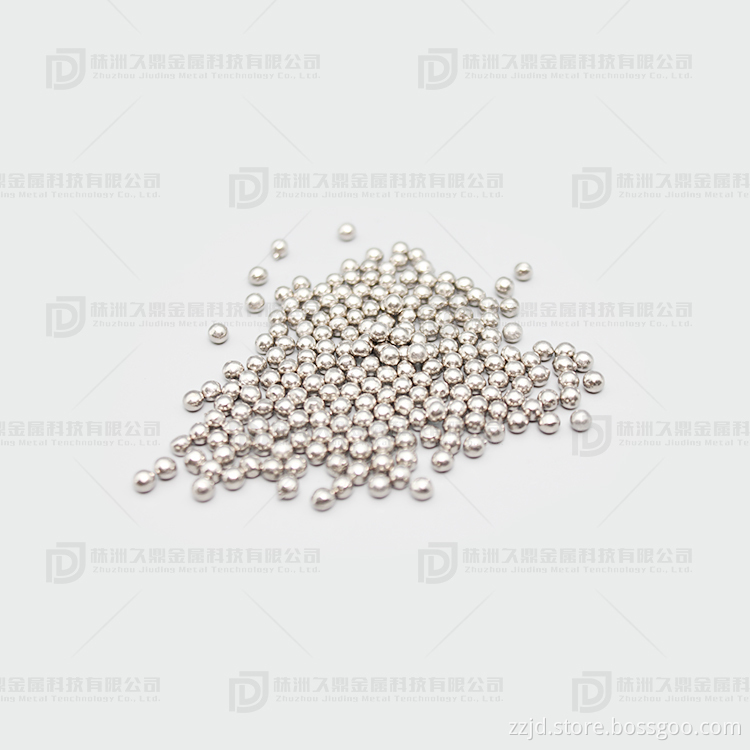
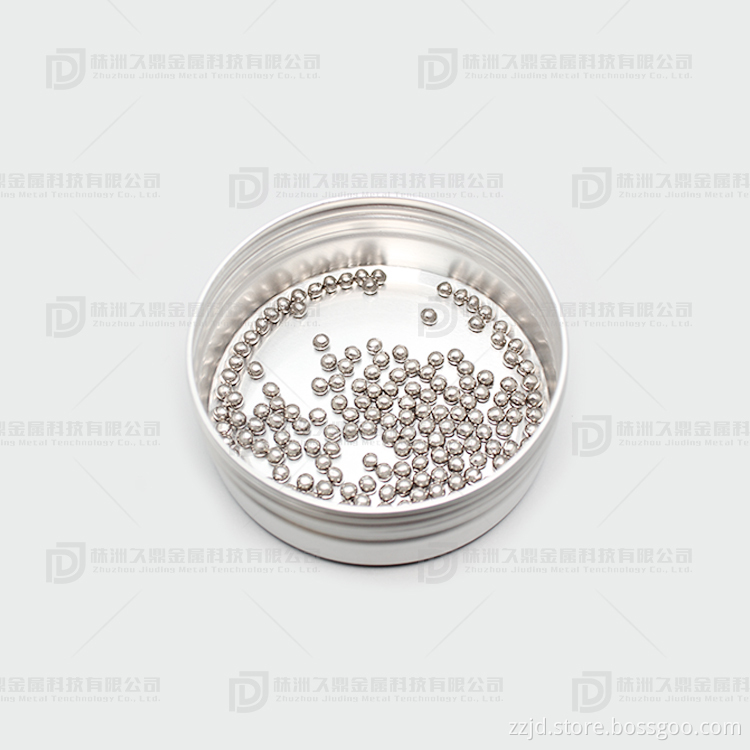
An eco-friendly bismuth ball is a spherical weight crafted from high-purity bismuth, a naturally occurring element prized for its non-toxic properties and exceptional density. Unlike traditional lead weights, bismuth balls offer a safe, environmentally responsible alternative that meets strict international safety standards without compromising performance.
These spheres are engineered for applications where weight efficiency and environmental safety are critical. From precision sports equipment to specialized industrial counterweights, bismuth balls provide reliable gravitational force while ensuring compliance with RoHS and REACH regulations. Their corrosion resistance ensures long-term durability in various environments, reducing the need for frequent replacement and lowering total cost of ownership.
At Zhuzhou Jiuding Metal Technology Co., Ltd., quality is not just a checkpoint—it's a core value embedded in every stage of production. Our manufacturing process for eco-friendly bismuth balls adheres to rigorous international standards, ensuring that every sphere meets precise specifications for weight, diameter, and surface finish.
ISO 9001, ISO 14001, and ISO 45001 certified facilities ensure consistent quality and environmental responsibility.
Advanced metrology tools verify weight accuracy within tight tolerances, guaranteeing batch consistency.
Selecting the correct bismuth ball requires careful consideration of your specific application requirements. Key factors include weight tolerance, size constraints, surface finish needs, and regulatory compliance standards relevant to your industry.
Before finalizing your procurement decision, use this comprehensive checklist to evaluate potential suppliers and products for your eco-friendly bismuth ball requirements.
Understanding common challenges in sourcing eco-friendly bismuth balls helps buyers avoid costly mistakes and ensure smooth procurement processes.
Poor quality control can result in significant weight variations between batches, affecting product balance and performance. Always request sample testing before large orders.
Oxidation or rough surfaces can compromise appearance and functionality. Specify required surface finish standards and request visual inspection reports.
Raw material shortages or production bottlenecks can extend lead times. Work with suppliers who maintain adequate inventory and have diversified supply chains.
Some suppliers may not provide complete documentation for regulatory compliance. Verify all certifications upfront to avoid customs or regulatory issues.
Inadequate packaging can lead to dents or scratches during transit. Require protective packaging solutions and inspect goods upon delivery.
Language differences and time zone gaps can cause misunderstandings about specifications. Establish clear communication protocols and regular update schedules.
Bismuth balls serve diverse industries where weight, safety, and environmental compliance are paramount. Their unique properties make them ideal for specialized applications across multiple sectors.
Used in golf clubs, tennis rackets, and fishing weights where precise weight distribution enhances performance while maintaining non-toxic safety standards.
Employed in radiation shielding and surgical instruments due to bismuth's high density and biocompatibility, meeting strict medical-grade requirements.
Utilized in aircraft counterweights and balance systems where weight efficiency and reliability are critical for flight safety and fuel economy.
Applied in vibration dampening, rotating equipment balancing, and precision machinery components requiring consistent gravitational force.
Used in downhole tools and weighting agents for drilling operations, offering corrosion resistance in harsh underground environments.
Integrated into electronic device balancing and electromagnetic shielding applications where non-magnetic properties are essential.
Selecting a reliable supplier is crucial for ensuring consistent quality, competitive pricing, and dependable delivery of eco-friendly bismuth balls. Look for partners who demonstrate technical expertise, robust quality systems, and commitment to sustainability.
With over two decades of experience in metal alloy manufacturing, Jiuding offers comprehensive solutions for bismuth ball production. Their state-of-the-art facilities, combined with advanced Metal Injection Molding (MIM) technology, enable precise customization for diverse applications.
When evaluating potential suppliers, consider these essential factors to ensure you partner with a manufacturer who can meet your specific requirements:
Get answers to common questions about eco-friendly bismuth balls, their applications, and procurement considerations.
Bismuth is a naturally occurring element that is completely non-toxic and environmentally benign. Unlike lead, which poses serious health risks and environmental hazards, bismuth does not accumulate in living organisms or contaminate soil and water sources. This makes bismuth balls ideal for applications where environmental impact is a concern, such as consumer products, food-related equipment, and residential applications.
Pure bismuth has a density of approximately 9.78 g/cm³ at room temperature. This high density makes bismuth balls effective for weight-sensitive applications while using significantly less volume compared to lighter materials. The density remains stable under normal operating conditions, ensuring consistent performance throughout the product's lifespan.
Yes, manufacturers like Zhuzhou Jiuding offer extensive customization options for bismuth balls. Through advanced machining and Metal Injection Molding (MIM) technologies, suppliers can produce spheres with precise diameters, weights, and surface finishes tailored to your exact specifications. Custom tolerances can range from standard commercial grades to precision medical-grade accuracy.
Absolutely. Bismuth's non-toxic nature and high density make it excellent for medical applications including radiation shielding, surgical instrument weighting, and diagnostic equipment components. Many manufacturers hold ISO 13485 certification specifically for medical device manufacturing, ensuring compliance with stringent healthcare industry standards.
Standard packaging typically includes protective foam inserts, bubble wrap, and sturdy cardboard boxes to prevent damage during transit. For larger quantities, suppliers offer wooden crates or palletized shipments with moisture barriers. Custom packaging solutions are available to meet specific handling requirements or customer branding needs.
Lead times vary based on order quantity and customization requirements. Standard stock items may ship within 1-2 weeks, while custom orders typically require 3-6 weeks for production and quality assurance. Rush orders may be available for urgent requirements, though additional charges may apply. Suppliers with established supply chains can often accommodate expedited timelines.
Quality verification should include dimensional measurements using calibrated calipers or micrometers, weight verification with precision scales, and visual inspection for surface defects. Request material test certificates (MTC) from the supplier confirming chemical composition and physical properties. For critical applications, consider third-party laboratory testing for additional assurance.
About Us
Related Products List
Contact Us

Privacy statement: Your privacy is very important to Us. Our company promises not to disclose your personal information to any external company with out your explicit permission.
Fill in more information so that we can get in touch with you faster
Privacy statement: Your privacy is very important to Us. Our company promises not to disclose your personal information to any external company with out your explicit permission.